
Chinese Medicine • Ballina NSW
Still sick after a virus, mould exposure, or tick bite?
You’re not imagining it.
Chinese medicine excels when you can’t seem to make progress and blood tests come back normal, but you feel anything but.
Post-viral fatigue, Long COVID, MCAS, POTS, mould and tick-borne illness, and many other difficult to treat diseases can be helped by the Chinese medicine approach.
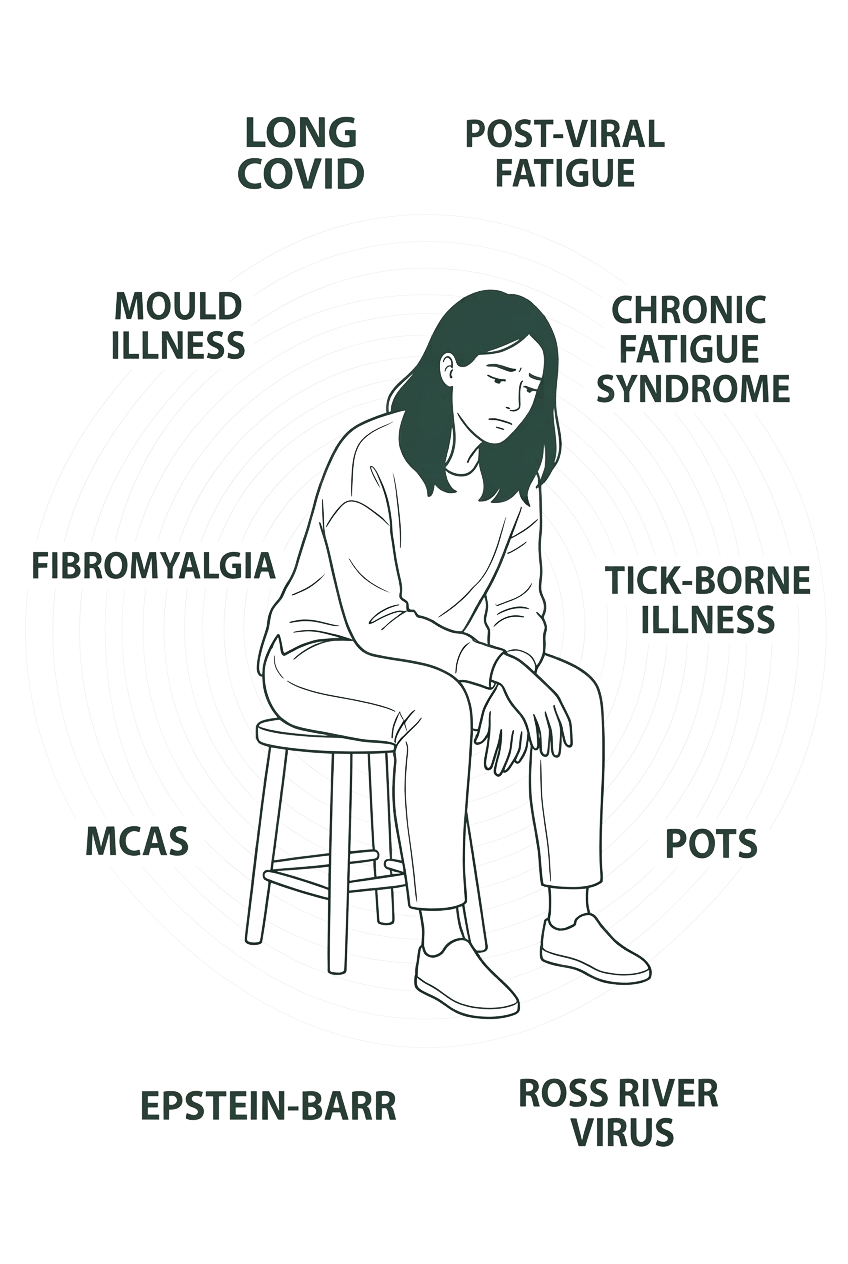
Does this sound like you?
You’re not looking for a general health tune-up. You’re looking for someone who has seen this pattern before.
- Fatigue that doesn’t improve with rest, no matter how much you sleep
- Brain fog that makes you feel like you’re thinking through wet concrete
- Symptoms across multiple systems at once (gut, nervous system, immune, skin)
- Blood tests come back “normal” while you feel anything but
- GPs suggested anxiety, depression, or that you need to manage your stress better
- Triggered by a bad virus, a flooded house, a tick bite, a vaccination, extreme stress
- You’ve improved a little, then crashed back. Over and over.
Conditions we see most often
These presentations come through the door most regularly. They overlap. A lot. Many patients have two or three of these layered on top of each other.

Post-Viral Fatigue and Long COVID
You never fully recovered after COVID, glandular fever, Ross River, or another viral illness. Lingering pathogenic factors trapped in the body.



POTS (Postural Orthostatic Tachycardia)
Standing up makes your heart race and your head swim. Autonomic dysregulation alongside Yin and Blood depletion.


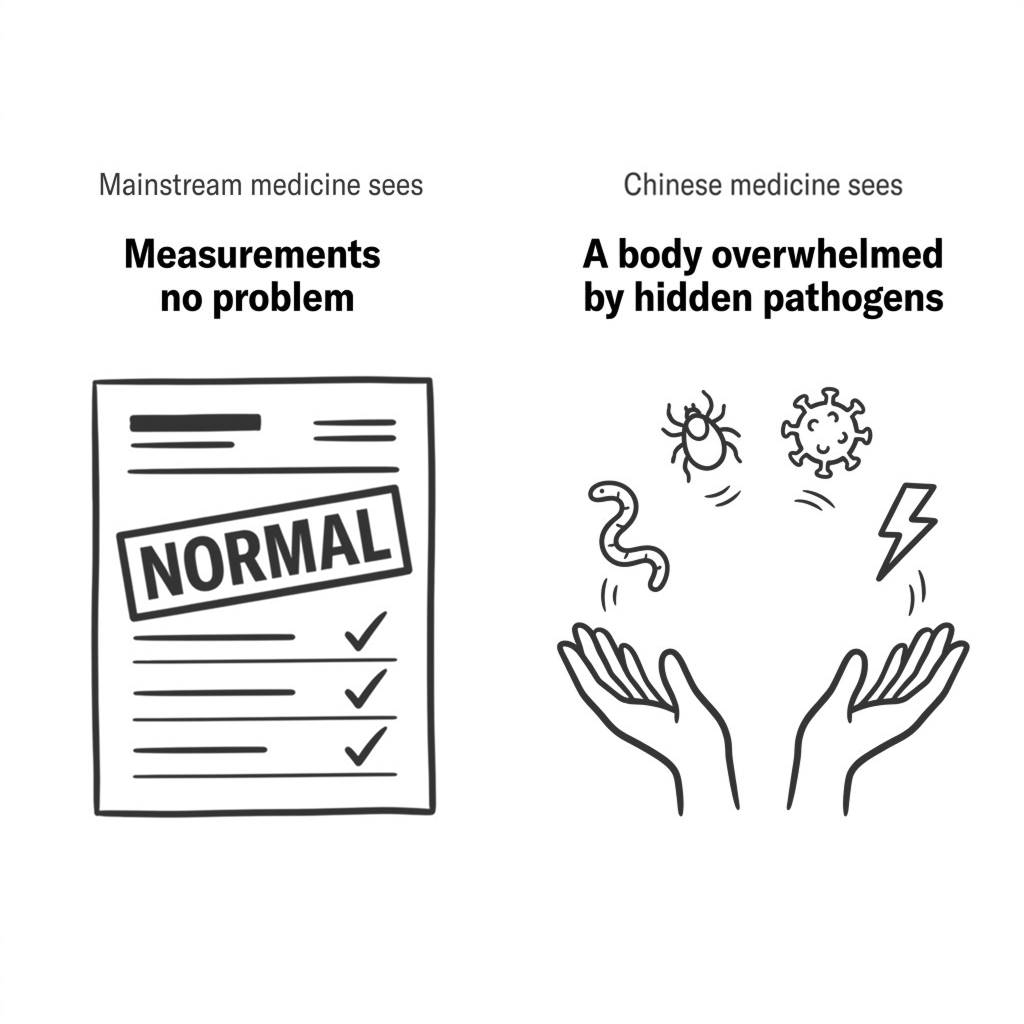
What Chinese Medicine Sees that Western Medicine Misses
Western medicine is built around single-disease diagnosis. One pathogen, one drug. One blood marker, one diagnosis.
That framework works brilliantly for acute illness. It works poorly for the patient whose problem is systemic, multi-layered, and doesn’t fit a single ICD code.
Chinese Medicine Works Differently
It looks at the whole pattern: which systems are dysregulated, how they relate to each other, what triggered the collapse, and what the body is doing now versus what it should be doing.
That framing makes it well-suited for complex chronic illness, where the liver, gut, nervous system, and immune function are all tangled together and the single-system approach keeps missing the point.
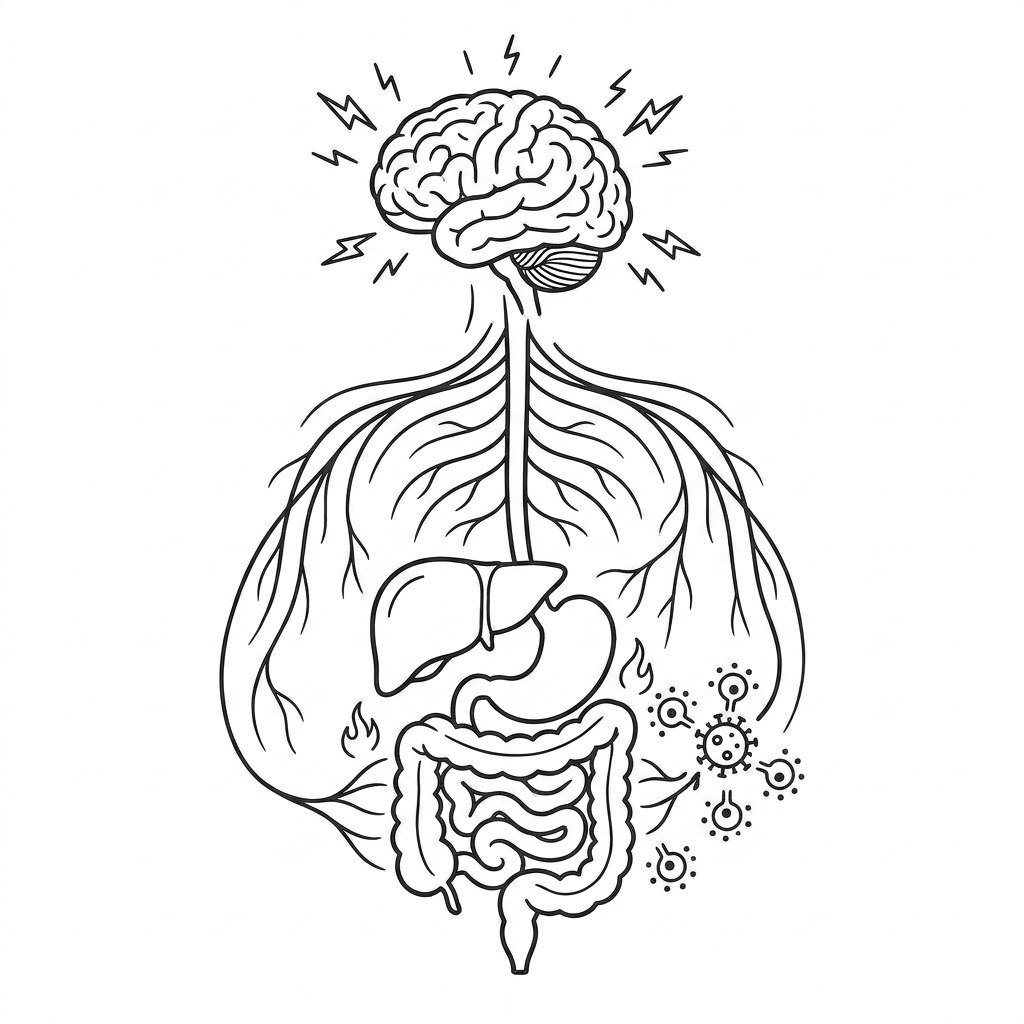
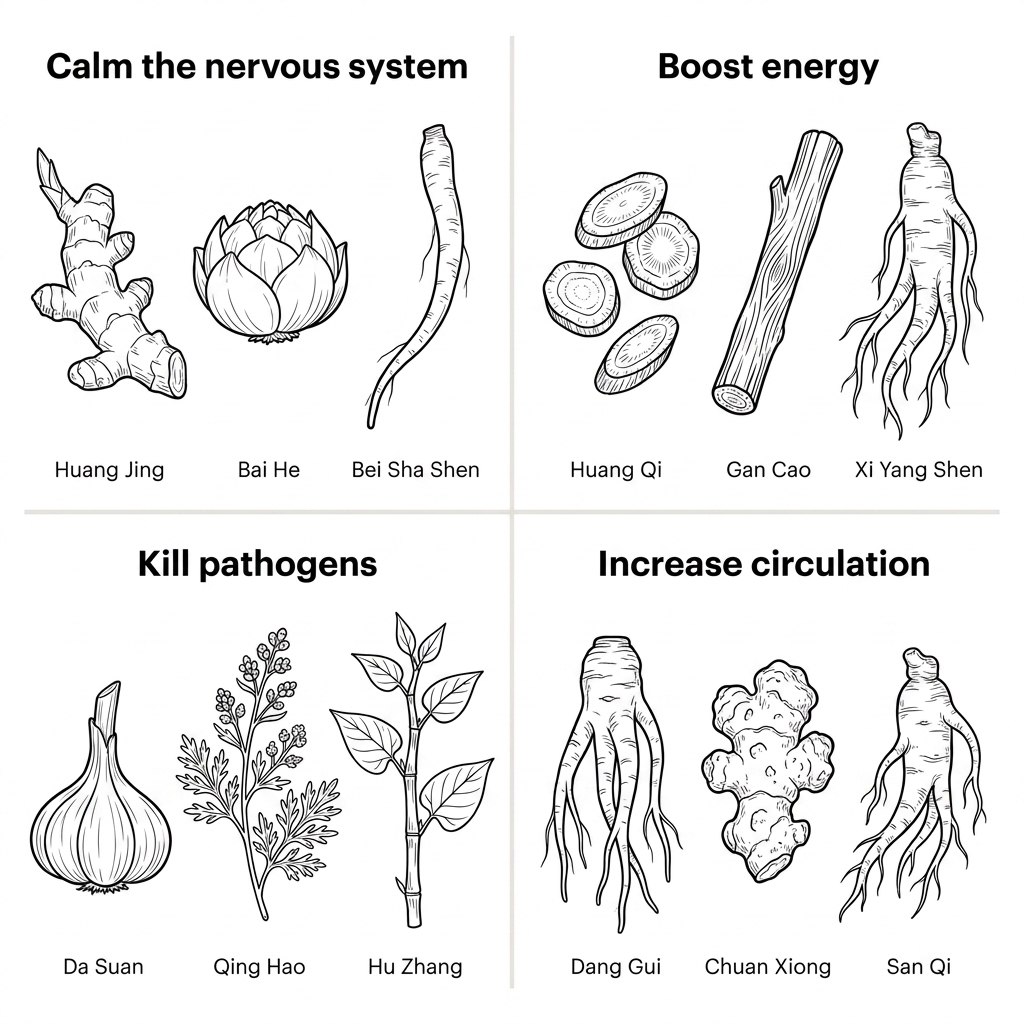
A Framework for Systemic Dysregulation
The classical framework Eric uses most often with these cases is called Gu Syndrome (踟).
It’s an illness that is hidden, stubborn, multi-system, prone to relapse, and triggered by an external pathogenic factor (a microorganism, a biotoxin, or an inflammatory stressor).
If you want to understand Gu Syndrome in more depth, start with the full explainer here.
How Eric works with complex cases
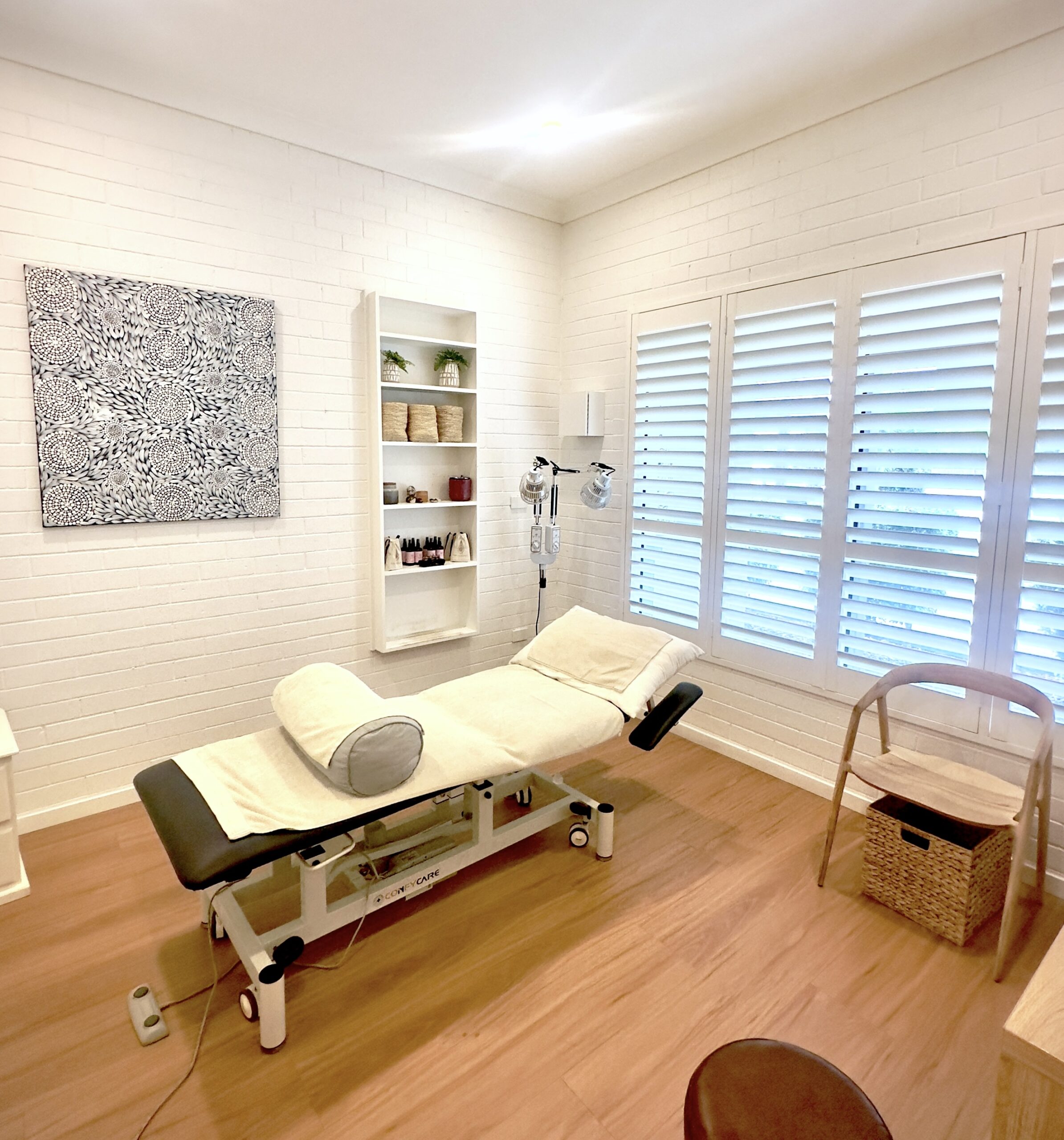
Your first appointment runs 60 to 90 minutes. Eric will ask questions you might not expect from an acupuncturist: your full symptom timeline, significant life events, previous infections, medications, what makes things better or worse, and the pattern of your crashes. The intake is the diagnosis.
Treatment usually combines acupuncture, a Chinese herbal formula tailored to your pattern, and auricular medicine. Herbs often do the heavy lifting between appointments and shift as your pattern changes.
Complex chronic illness takes time. Most cases stabilise noticeably in the first 6 to 8 weeks. Meaningful functional improvement takes 3 to 6 months of consistent treatment. Some cases take longer, particularly where there has been significant neurological involvement or years of untreated illness.
Eric won’t tell you he can fix this quickly. He will tell you what the treatment plan looks like and what markers he’s watching for. He refers out for relevant testing (mycotoxin panels, tick co-infection screening) and works alongside functional medicine doctors and GPs where appropriate.
About Eric Higashino
Eric completed his Bachelor of Chinese Medicine in Australia and trained in the Gu Syndrome framework under the lineage of Heiner Fruehauf, Professor of Classical Chinese Medicine at the National University of Natural Medicine in Portland, Oregon. Fruehauf’s clinical and scholarly work on Gu Syndrome is among the most rigorous English-language resources on this pattern in existence.
Eric has been in clinical practice for over a decade and is AHPRA registered (Registration No. CMR0002758292) as an acupuncturist, Chinese herbal medicine practitioner, and Chinese herbal dispenser.
His practice is at Kentro Health, 18 Cherry St, Ballina NSW 2478. He sees patients from Ballina, Byron Bay, Lismore, Mullumbimby, Bangalow, and across the Northern Rivers.
Common Questions
Can Chinese medicine actually help chronic complex illness?
For many patients, yes. Chinese medicine is particularly well-suited to multi-system illness because it works with patterns rather than single diagnoses. This is not a claim that Chinese medicine cures these conditions. It’s a statement that the framework is designed for exactly this kind of complexity. Results vary depending on the severity of the case, how long it has been present, and the patient’s capacity to engage with treatment over time.
What is Gu Syndrome and is it real?
Gu Syndrome (踟) is a classical Chinese medicine pattern category, not a biomedical diagnosis. It describes a constellation of symptoms: hidden, stubborn, multi-system illness that tends to relapse and is often triggered by an external pathogenic factor. The term is several thousand years old. The clinical pattern it describes maps closely onto what modern functional medicine calls biotoxin illness, post-infectious syndrome, and complex immune dysregulation. “Real” depends on your framework. Within Chinese medicine, it is one of the most coherent explanations for why these patients behave the way they do.
Do I need a Western diagnosis before booking?
No. Many patients come in without a clear Western diagnosis. That’s often the point. If you have relevant test results, bring them. They add context. But the Chinese medicine intake process doesn’t depend on a biomedical label to identify a pattern and build a treatment plan.
How long until I feel better?
Stabilisation (less reactivity, better baseline) typically happens in the first 4 to 8 weeks. Significant functional improvement takes 3 to 6 months of consistent treatment. Eric will give you a clearer timeframe after the first consultation, based on your specific pattern and how long you’ve been unwell.
Do you work with my GP or functional medicine doctor?
Yes. Eric communicates with referring and co-managing practitioners where the patient has given permission and where it adds value to the case. He will tell you directly if he thinks you need additional testing or a specific type of referral.
What does a first visit cost?
Fees are listed on the bookings page. The first consultation is longer than follow-ups given the intake process. HICAPS is available for private health fund rebates on acupuncture.