Chinese Medicine • Ballina NSW
Acupuncture for Pain Relief
Pain is the most common reason people seek acupuncture because it’s so effective.
If you have been managing pain with medication, physio, or willpower and it has not resolved, Chinese medicine offers a different map.
We look at it from a structural, neurological, mental-emotional, and overall body function perspective.
Where You Are Right Now
Most people arrive at acupuncture for pain after something else has stalled. Wherever you are in that process, there is a way forward.
You have tried everything
You have done the physio, osteo, possibly the chiro. It helped a little or for a while. The pain is still there.
Tests came back clear
The MRI, the X-ray, the blood work. Everything normal. But the pain is real and it is affecting your life.
It keeps coming back
Same injury, same area, same pattern. You recover, then it returns. Something isn’t being addressed.
Trying to avoid surgery
Surgery is a high risk option. Most pain doesn’t need surgery to resolve, but does need an expert to resolve.
What We Treat
Twelve pain presentations seen most often here. Each has a distinct pattern beneath the diagnosis, and a distinct treatment approach to match.
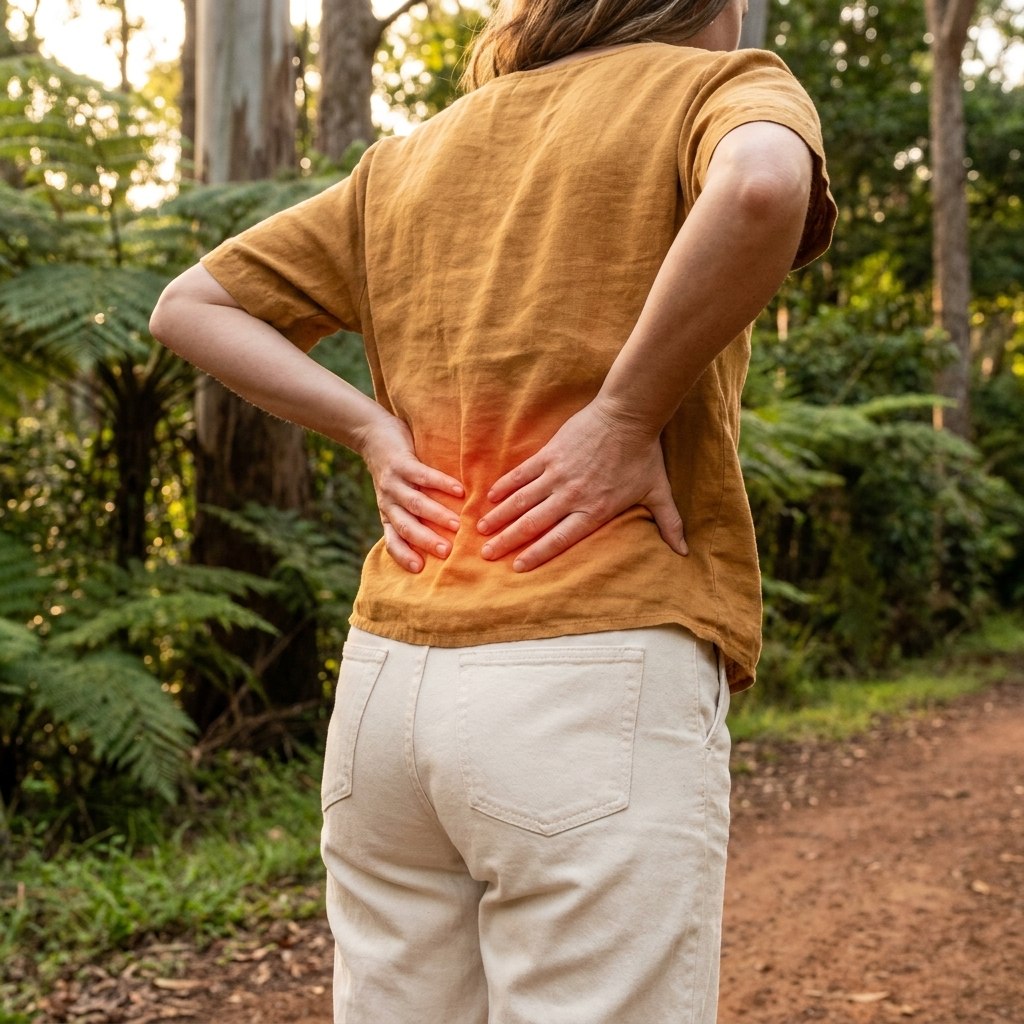
Lower Back Pain
The most common condition in the clinic. Back pain that still hasn't shifted with rest, physio, or time.
Neck and Shoulder Pain
Chronic tension across the upper back and neck, frozen shoulder, tech neck. Often connected to how the body holds stress.
Headaches and Migraines
Frequent headaches, migraines with aura, tension headaches. Cochrane evidence supports acupuncture for migraine prevention.
Sports and Acute Injury
Sprains, strains, tendinopathy, slow-healing injuries. Acupuncture helps clear the stuck phase where tissue stops progressing.
Period Pain
Cramping and pelvic heaviness that arrives with the cycle. Covered in more depth on the women's health page.
Sciatica Pain
Shooting or aching pain that runs from the lower back into the leg. Usually a nerve pathway picture that responds well.
Knee Pain
Pain from injury, overuse, or long-term wear. Often maintained by an underlying pattern that keeps inflammation going.
Fibromyalgia
Widespread pain, fatigue, and sleep disruption. NICE guidelines recommend acupuncture for chronic primary pain.
Post-Surgical Pain
Lingering pain after surgery. Scar tissue, nerve involvement, or a stuck inflammatory picture that hasn't cleared.
Osteoarthritis Pain
Joint pain from wear and degeneration. Cochrane evidence supports acupuncture for osteoarthritis, particularly the knee and hip.
Neuropathic Pain
Burning, tingling, or shooting pain from nerve damage or irritation. Covered in depth on the neurological page.
Hip Pain
Hip joint pain, bursitis, and referred pain into the groin or outer hip. A common presentation that often has a deeper constitutional root.
Four Diagnostic Lenses, Why the Same Pain Needs Different Treatment
Most pain practitioners work through one or two of these layers. Chinese medicine works through all four simultaneously. This is why it can help when other approaches have stalled.
Posture & Biomechanics
Is your back pain coming from a dysfunctional ankle? If the ankle is weak, your hips and back may be compensating leading to constant tension in your back with pain relief lasting a few days.
Neurological
Is the pain signal clear or compressed? Nerve entrapments, radiating pain that doesn't follow obvious structure. Chinese medicine maps this to specific channel pathways.
Stress and the Pain Loop
Is the threat response keeping the pain alive? Chronic pain that outlasts its physical cause often has this layer. The nervous system stays in alarm. Treatment addresses that.
Internal Function
Is there an internal pattern driving external pain? The same back pain can come from very different internal roots. This is where Chinese medicine adds something unique.
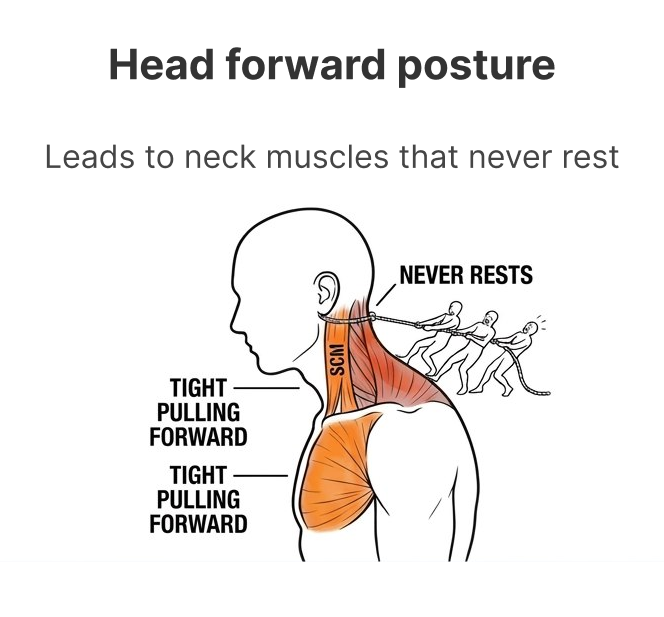
Does your pain relief only last a few days?
The tight muscle is usually a victim, not the cause.
Your neck is tight because your chest is. Sit at a desk and the pectorals shorten, pull the shoulders forward, and the neck has to brace all day just to hold your head up.
Treating the neck gives a few days of relief. Releasing the chest changes the load.
This is how I approach most pain, far from where it hurts. Neck pain through the chest. Back pain through the ankles. Hip pain from the opposite shoulder. The structure doing the pulling is rarely where you feel it.
Is your pain sharp, burning or have numbness?
Persistent pain that is difficult to treat often comes from nerves that are trapped or inflamed
Sharp, burning, electric, or pain that travels in a line. That’s nerve involvement.
Two things cause it: physical entrapment (a disc, joint, or tight fascia pressing on a nerve) or systemic inflammation lowering the pain threshold until nerves that should barely register become hyperreactive. Usually it’s both at once.
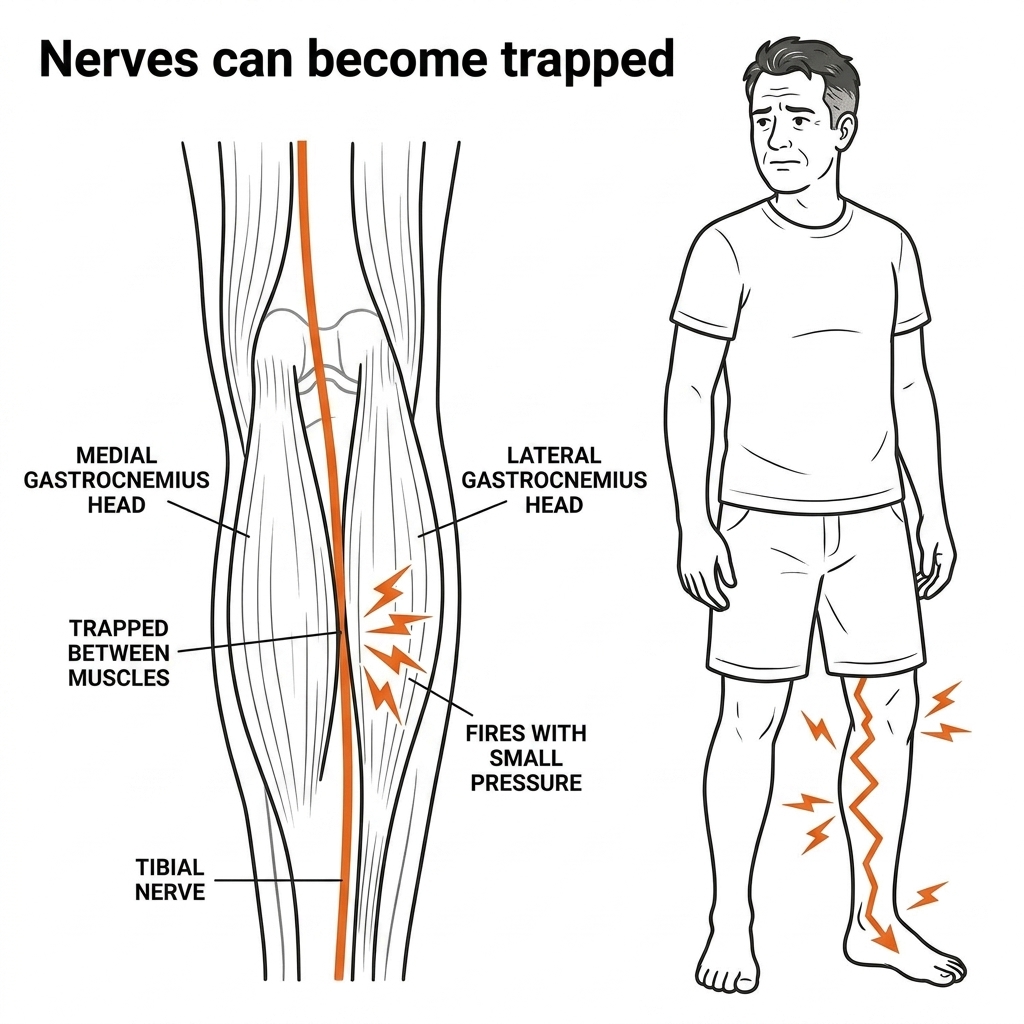
Acupuncture releases the local restriction. Herbal medicine changes the internal environment keeping the nervous system on high alert.
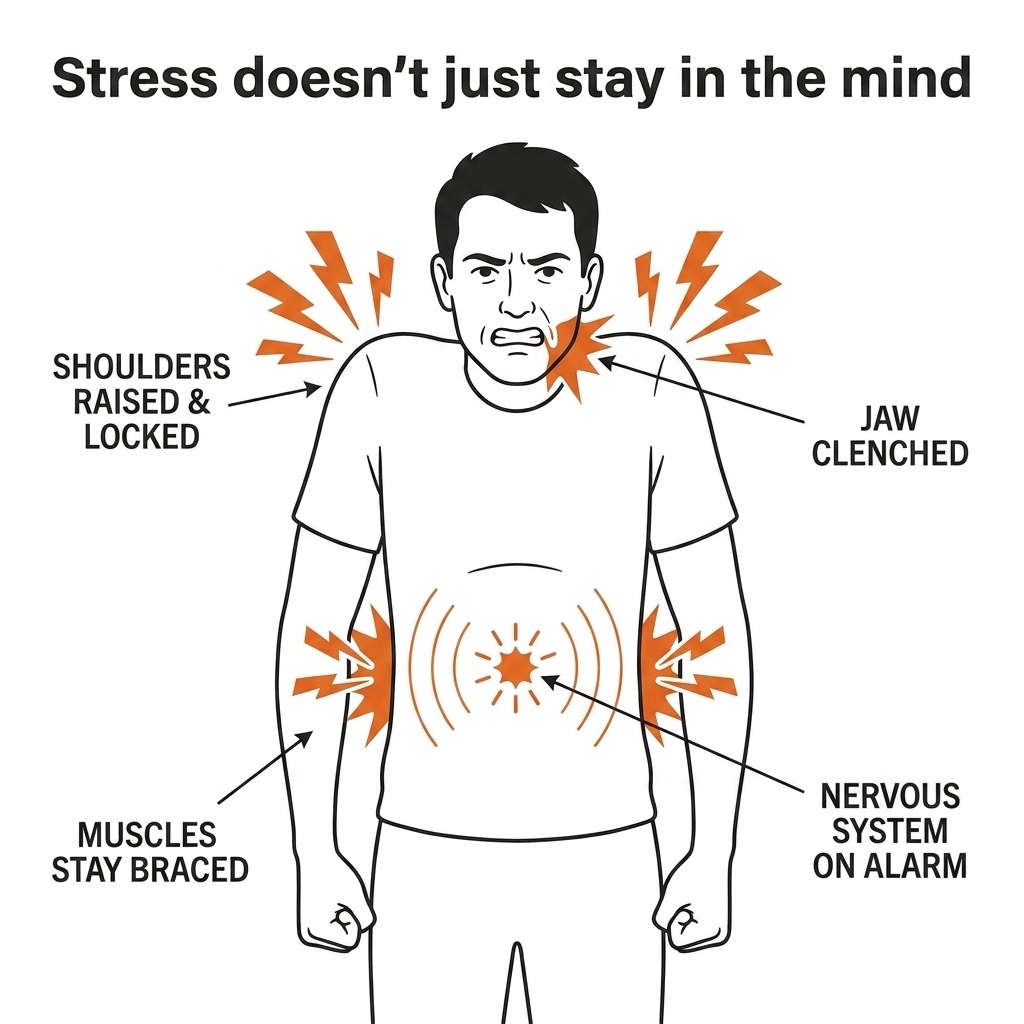
Is your pain worse when you're stressed?
Stress doesn't stay in the mind — it keeps your whole body braced
Stress lifts the shoulders, locks the jaw, tightens the fascia, and holds the nervous system in a low-grade alarm state. Muscles that should relax between tasks stay braced. Pain that might ease overnight doesn’t.
Acupuncture works directly on the autonomic nervous system. It shifts the body out of sympathetic overdrive, promotes parasympathetic tone, and triggers the release of the body’s own pain-regulating chemicals. The pain threshold rises. Sleep improves. The muscles finally get a chance to let go. Chinese herbal formulas that regulate Liver qi, calm the nervous system, and support the adrenals reinforce this effect between treatments. For pain that is clearly stress-driven, treating both together consistently outperforms treating either alone.
Your pain may be coming from your organs
Internal dysfunction leads to poor blood quality, circulation, and tension
In Chinese medicine, the organs produce the blood. Blood nourishes every tendon, muscle, and joint in the body. When that production is compromised — Kidney deficiency leaving tendons dry and stiff, Liver constraint reducing peripheral circulation, Spleen deficiency generating damp that settles into joints — the tissues stop receiving what they need to stay pliable and recover properly.
This is why chronic pain so often worsens when you’re depleted: after illness, with poor sleep, during heavy stress, in the days before a period. The tissues are running on low resources. Treating only the local area gives temporary relief but doesn’t fix the supply problem. Strengthening the organs responsible for producing good-quality blood and fluid often resolves pain that nothing else has been able to shift.
What a Treatment Looks Like for Pain
The first appointment runs 75 to 90 minutes. Pain cases usually have a detailed musculoskeletal history: onset, mechanism, character of pain, aggravating and relieving factors, what has been tried and what has helped. Tongue and pulse give additional information that the physical history alone doesn’t capture, particularly relevant for identifying the internal pattern (Kidney deficiency, Blood stasis, Liver Qi stagnation) that is driving or maintaining the pain.
Acupuncture is the primary treatment. Points on the affected area, along the relevant channels, and at distal points on the limbs all contribute. Local needling addresses the site. Distal points move the pain from a distance. Most patients find acupuncture deeply relaxing, which is itself part of the therapeutic work for stress-maintained pain.
Cupping may be used for deep muscular tension or stubborn Blood stasis patterns. Moxa (warming) is used for cold-pattern pain, cold lower back, cold joints, pain that is reliably better with heat. Ear acupuncture is sometimes added for chronic pain where central sensitisation is a component.
Frequency: weekly for the first 6 to 8 sessions for most presentations. Chronic pain conditions typically need 8 to 12 weeks before a clear trend is visible. Acute and subacute presentations often respond faster.
Chinese herbal medicine is prescribed alongside acupuncture when an internal pattern is prominent. Kidney deficiency, Liver Blood deficiency, and Blood stasis patterns particularly benefit from herbal support between sessions.
This works best alongside your existing care team, not instead of it. Eric (AHPRA CMR0002758292) is happy to write clinical notes for your GP or physio if that is useful.
Common Questions
Can acupuncture help with chronic pain?
Yes. The Acupuncture Trialists Collaboration pooled data from 39 randomised controlled trials and found that acupuncture produces clinically meaningful reductions in chronic pain that persist at 12-month follow-up. Cochrane systematic reviews independently support acupuncture for lower back pain, neck pain, knee osteoarthritis, and headache and migraine. NICE NG193 (2021) recommends acupuncture for chronic primary pain. Pain is the condition category where the evidence for acupuncture is strongest.
How does Chinese medicine understand pain differently?
Chinese medicine reads pain through pattern diagnosis: the character of the pain (aching, stabbing, burning, heavy), what makes it better or worse (heat, cold, pressure, movement, stress, rest), and how it connects to overall health and constitution. This produces a different map to an MRI or a biomechanical assessment, not competing, but additional. It explains why two people with the same diagnosis often respond differently to treatment, and why the same person’s pain changes with seasons or stress levels.
How many sessions will I need?
It depends on how long the pain has been present and what is driving it. Acute and subacute presentations (recent onset, clear mechanical cause) often show meaningful change in 4 to 6 sessions. Chronic pain conditions typically need 8 to 12 sessions before a clear trend is visible. Fibromyalgia and central sensitisation patterns take longer. A realistic treatment plan is discussed at the first appointment.
Will it work alongside my physio, osteo, or GP?
Yes, and it is usually better that way. Chinese medicine adds a layer of diagnosis and treatment that complements rather than competes with physiotherapy, osteopathy, or medical management. Eric is registered with AHPRA (CMR0002758292) and is happy to write clinical notes for your treating team.
Is acupuncture painful?
Most patients find acupuncture much more comfortable than they expected. The needles are fine-gauge, much thinner than a blood draw needle. You may feel a dull ache, heaviness, or warmth at the needle site. This is normal and is what acupuncture practitioners call the needle sensation. Most people find the treatment deeply relaxing.
How do I know if Chinese medicine can help my specific pain?
The clearest signal is whether your pain has any of the following: it varies with weather or seasons, it is linked to stress or emotional state, it comes with fatigue or other systemic symptoms, it has not responded to structural treatment despite a clear structural diagnosis, or it came back after resolving. Any of these suggest there is a pattern beyond the mechanical that Chinese medicine can address. The first consultation will tell you whether this approach is right for your presentation.
Pain That Hasn't Shifted?
Most people arrive after something else has stalled. One consultation will tell you whether there is a Chinese medicine pattern behind your pain and what a realistic treatment plan looks like.
Does your pain relief only last a few days?
You can't just look at the tight muscles, but the ones keeping those muscles working all day
Muscles don’t work in isolation. When your neck is tight, the useful question is: what is making the neck work that hard? For most people who sit at a desk, it’s the chest. The pectorals are shortened, engaged, and pulling the shoulders forward all day. The neck muscles brace constantly just to hold the head up against that pull. Treating the neck gives relief for a few days. Treating the chest changes the load.
This is how I approach a lot of pain. Neck pain treated through the chest. Back pain treated through the ankles. Hip pain addressed from the opposite shoulder. The body is a tensioned system, and the structure generating the most pull is often nowhere near where the pain is. Releasing that driver is where lasting change tends to happen.
Is your pain sharp, burning or have numbness?
Persistent pain that is difficult to treat often comes from nerves that are trapped or inflamed
Sharp, electric, burning, or pain that travels in a line. These patterns usually involve the nervous system. Sometimes there is a physical entrapment: a compressed disc, tight fascial channel, or restricted joint pressing on a nerve. Sometimes the nerve has become sensitised by inflammation circulating through the body. Often it is a combination of both.
Chronic inflammation from gut dysfunction, hormonal imbalance, or immune dysregulation can lower the pain threshold across the entire nervous system. A small mechanical irritation that should barely register produces an outsized response. Chinese medicine addresses both sides. Acupuncture at local points releases the mechanical restriction. Herbal formulas that clear heat and reduce systemic inflammation change the internal environment that is keeping the nervous system hyperreactive.
Is your pain worse when you're stressed?
Stress doesn't stay in the mind. It keeps your whole body braced
Stress lifts the shoulders, locks the jaw, tightens the fascia, and holds the nervous system in a low-grade alarm state. Muscles that should relax between tasks stay braced. Pain that might ease overnight doesn’t.
Acupuncture works directly on the autonomic nervous system. It shifts the body out of sympathetic overdrive, promotes parasympathetic tone, and triggers the release of the body’s own pain-regulating chemicals. The pain threshold rises. Sleep improves. The muscles finally get a chance to let go. Chinese herbal formulas that regulate Liver qi, calm the nervous system, and support the adrenals reinforce this effect between treatments. For pain that is clearly stress-driven, treating both together consistently outperforms treating either alone.
Your pain may be coming from your organs
Internal dysfunction leads to poor blood quality, circulation, and tension
In Chinese medicine, the organs produce the blood. Blood nourishes every tendon, muscle, and joint in the body. When that production is compromised (Kidney deficiency leaving tendons dry and stiff, Liver constraint reducing peripheral circulation, Spleen deficiency generating damp that settles into joints) the tissues stop receiving what they need to stay pliable and recover properly.
This is why chronic pain so often worsens when you’re depleted: after illness, with poor sleep, during heavy stress, in the days before a period. The tissues are running on low resources. Treating only the local area gives temporary relief but doesn’t fix the supply problem. Strengthening the organs responsible for producing good-quality blood and fluid often resolves pain that nothing else has been able to shift.
row_height_percent=”0″ override_padding=”yes” h_padding=”2″ top_padding=”3″ bottom_padding=”3″ back_color=”color-lxmt” overlay_alpha=”100″ gutter_size=”3″ column_width_percent=”100″ shift_y=”0″ z_index=”0″ uncode_shortcode_id=”pa_hero_row” back_color_type=”uncode-palette”]
Chinese Medicine • Ballina NSW
Acupuncture for Pain Relief
If you have been managing pain with medication, physio, or willpower and it has not resolved, Chinese medicine offers a different map.
We look at it from a structural, neurological, mental-emotional, and overall body function perspective.

Where You Are Right Now
Most people arrive at acupuncture for pain after something else has stalled. Wherever you are in that process, there is a way forward.
You have tried everything
You have done the physio, osteo, possibly the chiro. It helped a little or for a while. The pain is still there.
Tests came back clear
The MRI, the X-ray, the blood work. Everything normal. But the pain is real and it is affecting your life.
It keeps coming back
Same injury, same area, same pattern. You recover, then it returns. Something isn’t being addressed.
Trying to avoid surgery
Surgery is a high risk option. Most pain doesn’t need surgery to resolve, but does need an expert to resolve.
What We Treat
Twelve pain presentations seen most often here. Each has a distinct pattern beneath the diagnosis, and a distinct treatment approach to match.
Lower Back Pain
The most common condition in the clinic. Back pain that still hasn't shifted with rest, physio, or time.
Neck and Shoulder Pain
Chronic tension across the upper back and neck, frozen shoulder, tech neck. Often connected to how the body holds stress.
Headaches and Migraines
Frequent headaches, migraines with aura, tension headaches. Cochrane evidence supports acupuncture for migraine prevention.
Sports and Acute Injury
Sprains, strains, tendinopathy, slow-healing injuries. Acupuncture helps clear the stuck phase where tissue stops progressing.
Period Pain
Cramping and pelvic heaviness that arrives with the cycle. Covered in more depth on the women's health page.
Sciatica Pain
Shooting or aching pain that runs from the lower back into the leg. Usually a nerve pathway picture that responds well.
Knee Pain
Pain from injury, overuse, or long-term wear. Often maintained by an underlying pattern that keeps inflammation going.
Fibromyalgia
Widespread pain, fatigue, and sleep disruption. NICE guidelines recommend acupuncture for chronic primary pain.
Post-Surgical Pain
Lingering pain after surgery. Scar tissue, nerve involvement, or a stuck inflammatory picture that hasn't cleared.
Osteoarthritis Pain
Joint pain from wear and degeneration. Cochrane evidence supports acupuncture for osteoarthritis, particularly the knee and hip.
Neuropathic Pain
Burning, tingling, or shooting pain from nerve damage or irritation. Covered in depth on the neurological page.
Hip Pain
Hip joint pain, bursitis, and referred pain into the groin or outer hip. A common presentation that often has a deeper constitutional root.
Four Diagnostic Lenses, Why the Same Pain Needs Different Treatment
Most pain practitioners work through one or two of these layers. Chinese medicine works through all four simultaneously. This is why it can help when other approaches have stalled.
Posture & Biomechanics
Is your back pain coming from a dysfunctional ankle? If the ankle is weak, your hips and back may be compensating leading to constant tension in your back with pain relief lasting a few days.
Neurological
Is the pain signal clear or compressed? Nerve entrapments, radiating pain that doesn't follow obvious structure. Chinese medicine maps this to specific channel pathways.
Stress and the Pain Loop
Is the threat response keeping the pain alive? Chronic pain that outlasts its physical cause often has this layer. The nervous system stays in alarm. Treatment addresses that.
Internal Function
Is there an internal pattern driving external pain? The same back pain can come from very different internal roots. This is where Chinese medicine adds something unique.
Does your pain relief only last a few days?
You can't just look at the tight muscles, but the ones keeping those muscles working all day
Muscles don’t work in isolation. When your neck is tight, the useful question is: what is making the neck work that hard? For most people who sit at a desk, it’s the chest. The pectorals are shortened, engaged, and pulling the shoulders forward all day. The neck muscles brace constantly just to hold the head up against that pull. Treating the neck gives relief for a few days. Treating the chest changes the load.
This is how I approach a lot of pain. Neck pain treated through the chest. Back pain treated through the ankles. Hip pain addressed from the opposite shoulder. The body is a tensioned system, and the structure generating the most pull is often nowhere near where the pain is. Releasing that driver is where lasting change tends to happen.
Is your pain sharp, burning or have numbness?
Persistent pain that is difficult to treat often comes from nerves that are trapped or inflamed
Sharp, electric, burning, or pain that travels in a line — these patterns usually involve the nervous system. Sometimes there is a physical entrapment: a compressed disc, tight fascial channel, or restricted joint pressing on a nerve. Sometimes the nerve has become sensitised by inflammation circulating through the body. Often it is a combination of both.
Chronic inflammation from gut dysfunction, hormonal imbalance, or immune dysregulation can lower the pain threshold across the entire nervous system. A small mechanical irritation that should barely register produces an outsized response. Chinese medicine addresses both sides. Acupuncture at local points releases the mechanical restriction. Herbal formulas that clear heat and reduce systemic inflammation change the internal environment that is keeping the nervous system hyperreactive.
Is your pain worse when you're stressed?
Stress doesn't stay in the mind — it keeps your whole body braced
Stress lifts the shoulders, locks the jaw, tightens the fascia, and holds the nervous system in a low-grade alarm state. Muscles that should relax between tasks stay braced. Pain that might ease overnight doesn’t.
Acupuncture works directly on the autonomic nervous system. It shifts the body out of sympathetic overdrive, promotes parasympathetic tone, and triggers the release of the body’s own pain-regulating chemicals. The pain threshold rises. Sleep improves. The muscles finally get a chance to let go. Chinese herbal formulas that regulate Liver qi, calm the nervous system, and support the adrenals reinforce this effect between treatments. For pain that is clearly stress-driven, treating both together consistently outperforms treating either alone.
Your pain may be coming from your organs
Internal dysfunction leads to poor blood quality, circulation, and tension
In Chinese medicine, the organs produce the blood. Blood nourishes every tendon, muscle, and joint in the body. When that production is compromised — Kidney deficiency leaving tendons dry and stiff, Liver constraint reducing peripheral circulation, Spleen deficiency generating damp that settles into joints — the tissues stop receiving what they need to stay pliable and recover properly.
This is why chronic pain so often worsens when you’re depleted: after illness, with poor sleep, during heavy stress, in the days before a period. The tissues are running on low resources. Treating only the local area gives temporary relief but doesn’t fix the supply problem. Strengthening the organs responsible for producing good-quality blood and fluid often resolves pain that nothing else has been able to shift.
What a Treatment Looks Like for Pain
The first appointment runs 75 to 90 minutes. Pain cases usually have a detailed musculoskeletal history: onset, mechanism, character of pain, aggravating and relieving factors, what has been tried and what has helped. Tongue and pulse give additional information that the physical history alone doesn’t capture, particularly relevant for identifying the internal pattern (Kidney deficiency, Blood stasis, Liver Qi stagnation) that is driving or maintaining the pain.
Acupuncture is the primary treatment. Points on the affected area, along the relevant channels, and at distal points on the limbs all contribute. Local needling addresses the site. Distal points move the pain from a distance. Most patients find acupuncture deeply relaxing, which is itself part of the therapeutic work for stress-maintained pain.
Cupping may be used for deep muscular tension or stubborn Blood stasis patterns. Moxa (warming) is used for cold-pattern pain, cold lower back, cold joints, pain that is reliably better with heat. Ear acupuncture is sometimes added for chronic pain where central sensitisation is a component.
Frequency: weekly for the first 6 to 8 sessions for most presentations. Chronic pain conditions typically need 8 to 12 weeks before a clear trend is visible. Acute and subacute presentations often respond faster.
Chinese herbal medicine is prescribed alongside acupuncture when an internal pattern is prominent. Kidney deficiency, Liver Blood deficiency, and Blood stasis patterns particularly benefit from herbal support between sessions.
This works best alongside your existing care team, not instead of it. Eric (AHPRA CMR0002758292) is happy to write clinical notes for your GP or physio if that is useful.
Common Questions
Can acupuncture help with chronic pain?
Yes. The Acupuncture Trialists Collaboration pooled data from 39 randomised controlled trials and found that acupuncture produces clinically meaningful reductions in chronic pain that persist at 12-month follow-up. Cochrane systematic reviews independently support acupuncture for lower back pain, neck pain, knee osteoarthritis, and headache and migraine. NICE NG193 (2021) recommends acupuncture for chronic primary pain. Pain is the condition category where the evidence for acupuncture is strongest.
How does Chinese medicine understand pain differently?
Chinese medicine reads pain through pattern diagnosis: the character of the pain (aching, stabbing, burning, heavy), what makes it better or worse (heat, cold, pressure, movement, stress, rest), and how it connects to overall health and constitution. This produces a different map to an MRI or a biomechanical assessment, not competing, but additional. It explains why two people with the same diagnosis often respond differently to treatment, and why the same person’s pain changes with seasons or stress levels.
How many sessions will I need?
It depends on how long the pain has been present and what is driving it. Acute and subacute presentations (recent onset, clear mechanical cause) often show meaningful change in 4 to 6 sessions. Chronic pain conditions typically need 8 to 12 sessions before a clear trend is visible. Fibromyalgia and central sensitisation patterns take longer. A realistic treatment plan is discussed at the first appointment.
Will it work alongside my physio, osteo, or GP?
Yes, and it is usually better that way. Chinese medicine adds a layer of diagnosis and treatment that complements rather than competes with physiotherapy, osteopathy, or medical management. Eric is registered with AHPRA (CMR0002758292) and is happy to write clinical notes for your treating team.
Is acupuncture painful?
Most patients find acupuncture much more comfortable than they expected. The needles are fine-gauge, much thinner than a blood draw needle. You may feel a dull ache, heaviness, or warmth at the needle site. This is normal and is what acupuncture practitioners call the needle sensation. Most people find the treatment deeply relaxing.
How do I know if Chinese medicine can help my specific pain?
The clearest signal is whether your pain has any of the following: it varies with weather or seasons, it is linked to stress or emotional state, it comes with fatigue or other systemic symptoms, it has not responded to structural treatment despite a clear structural diagnosis, or it came back after resolving. Any of these suggest there is a pattern beyond the mechanical that Chinese medicine can address. The first consultation will tell you whether this approach is right for your presentation.