
Chinese Medicine • Ballina NSW
Acupuncture for Tick-Borne Illness
Most tick bites pass. Some don’t.
Chinese medicine for what lingers after, with or without a diagnosis.
Reacting to red meat or dairy since a bite? Start with SAAT for alpha-gal.
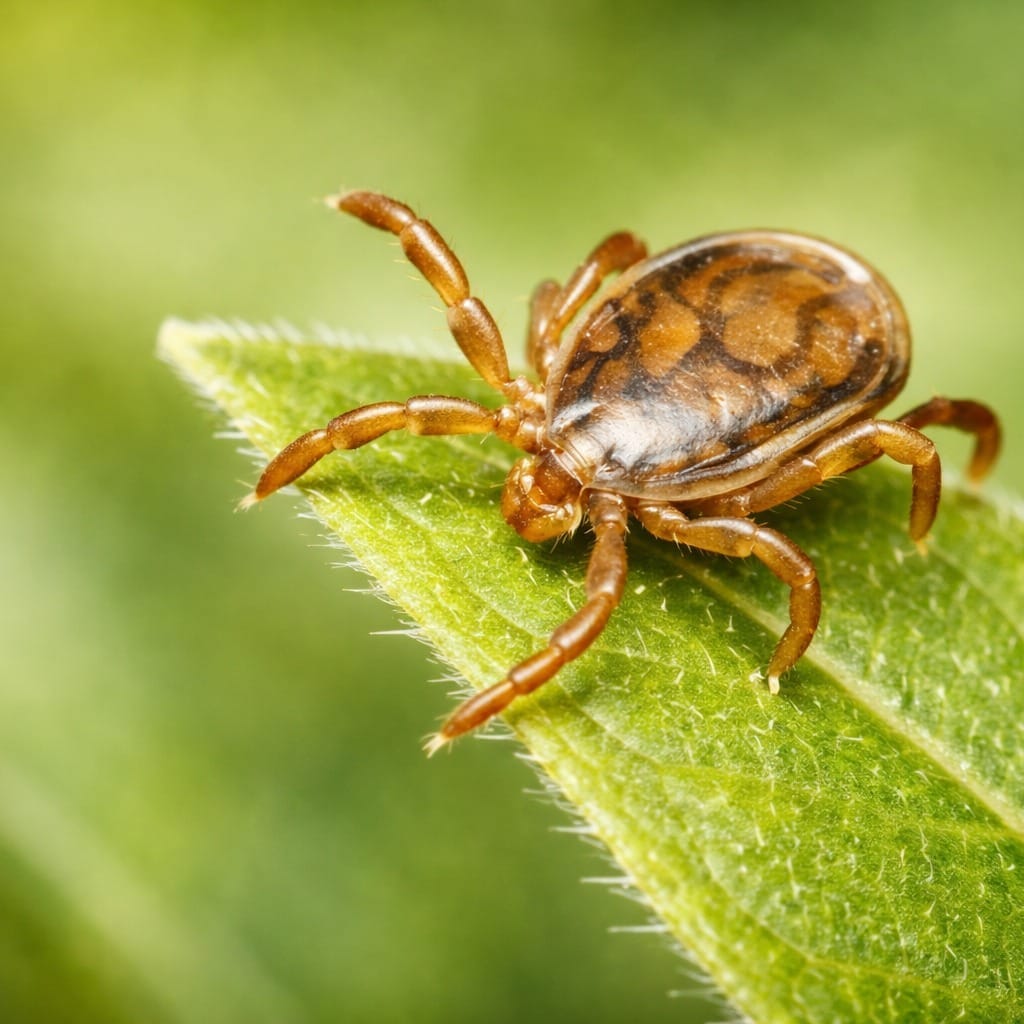
Where You Are Right Now
Most people arrive here after the conventional path has stalled. Whichever point you’re at, there’s a way in.
You were recently bitten
Weeks or months after the bite, something changed and hasn’t gone back. Joint pain, fatigue, brain fog, sensitivities that never existed before.
Tests normal, still unwell
Your tests come back normal, but your nervous system is in chaos. Labels like DSCATT or dysautonomia often arrive without a positive test to point to.
Treated, but still symptomatic
You completed the antibiotics. The acute phase is over. But some symptoms stayed, or new ones emerged. Post-treatment presentations are common in tick-borne illness and can stick around for years.
Tick-related allergy
SAAT for Alpha-Gal
Reacting to red meat, dairy or gelatine hours after eating, usually after a tick bite? SAAT is the ear acupuncture approach I use for alpha-gal, alongside avoidance and your allergist's care. The evidence is early and uncontrolled, and I'll be straight with you about what it can and can't do.


The Chinese medicine lens
Gu Syndrome and Tick-Borne Illness
Gu syndrome is a classical Chinese medicine category for lurking pathogens: illness that shifts, migrates and never quite resolves. Heiner Fruehauf's scholarship shows how closely it maps onto DSCATT and post-tick illness, which gives treatment a direction whether or not a Western diagnosis is ever confirmed.
Reacting to everything
SAAT for MCAS
Foods, smells, heat or chemicals that never bothered you before a bite or illness? Mast cell reactivity can follow tick-borne illness. SAAT is the ear acupuncture approach I use for this kind of reactivity, alongside the care you already have.

Conditions Supported Here
Six presentations I see most often after tick exposure. In Chinese medicine they share a common thread, a pathogen lingering in the channels and disrupting the terrain, with different patterns beneath each.
Tick Bite Reaction
Acute and delayed reactions after a bite: lingering itch, swelling, fatigue or feeling off for weeks. Chinese medicine can support you early, alongside your GP. If the reaction is allergic, SAAT may be an option.
Dysautonomia / DSCATT
Migrating symptoms that shift and don’t confirm cleanly on testing, including POTS-type symptoms. Chinese medicine works from the pattern, whether or not a diagnosis has been reached.
Co-Infections
Ticks can carry more than one organism, and some people are investigated for co-infections such as Bartonella or Babesia. Testing and antimicrobial treatment sit with your doctor. Chinese medicine supports the symptom picture alongside that care.
Chronic Fatigue
Months or years of illness drain the body’s reserves. Treatment focuses on rebuilding energy and resilience through a longer-term recovery programme.
Lyme-Like Illness
Lyme disease isn’t officially recognised as locally acquired in Australia, so many people are left without a label. I work with the symptom pattern in front of me, whatever it’s called.
Neurological Dysregulation
Brain fog, peripheral tingling, neuropathy, and cognitive symptoms following tick exposure. Treatment overlaps with my neurological acupuncture approach.
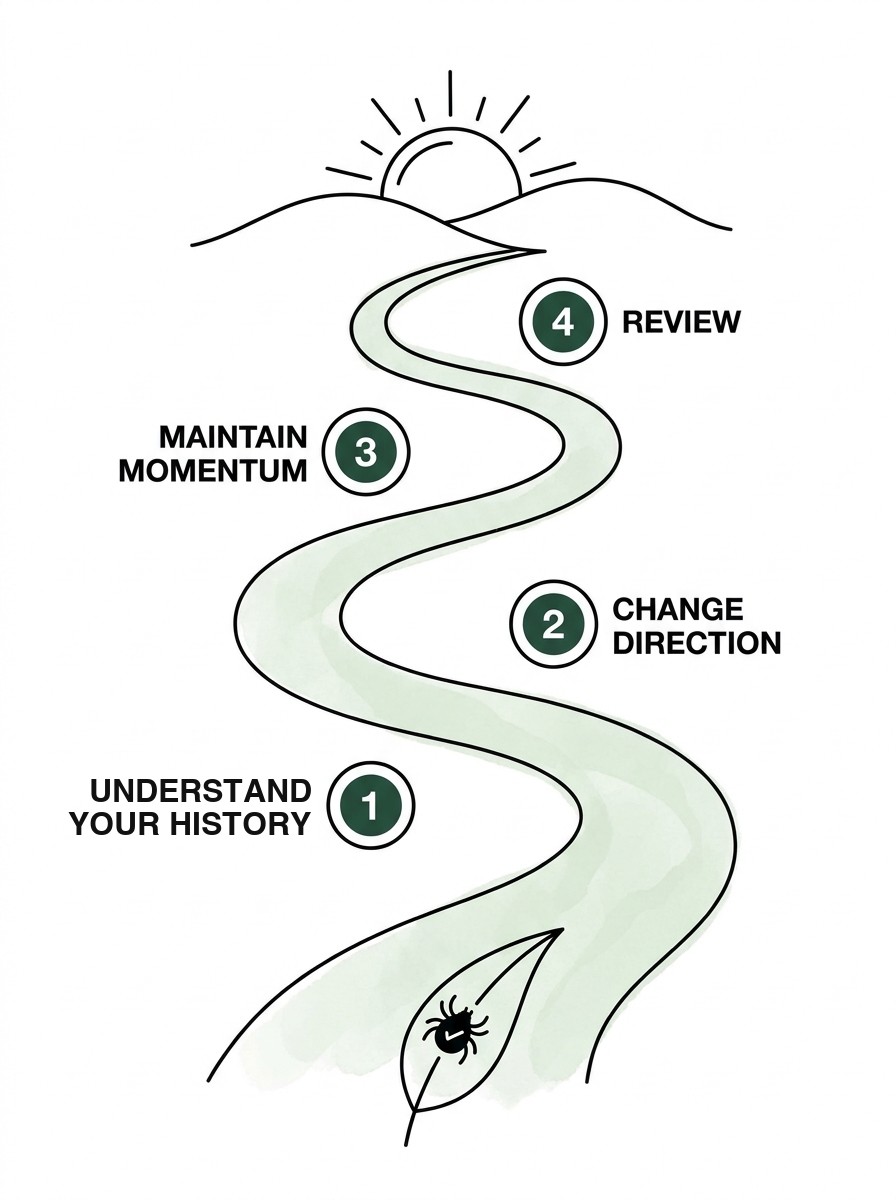
What Treatment Looks Like for Complex Tick-Borne Illness
1. Understand Your History
Initial consultation, 60 to 90 minutesYour story first: when the bite happened, what changed, your tests and the workup so far. Tongue and pulse add what the history can't.
2. Change Direction
Weekly for 4 to 6 weeksAcupuncture plus a herbal formula built around the lingering pathogen, the depletion underneath and the Damp-Phlegm that keeps it going. SAAT is added if allergy reactivity is part of your picture. Recent post-bite cases sometimes shift within this window.
3. Maintain Momentum
Every 2 to 3 weeks for 3 to 6 monthsAs things settle, visits space out and the formula changes with your pattern. Long-standing illness is slower, so this is the stretch where we judge how it's really going.
4. Review
Then, togetherWe look at what has changed and decide together: space out further, keep going, or stop.
This is an example, not a prescription. Your plan depends on how long you have been unwell and how you respond.
I work alongside your GP, infectious disease physician, immunologist or functional medicine practitioner, and I’m happy to write clinical notes for your treating team.
Common Questions
Can Chinese medicine help with tick-borne illness in Australia?
Chinese medicine provides supportive care for the symptom patterns associated with tick-borne illness, including fatigue, pain, cognitive symptoms, and immune dysregulation. It does not diagnose or cure tick-borne infections. The approach is pattern-based, meaning treatment is informed by the symptom picture, not solely by what has been confirmed on a test. This is particularly relevant for DSCATT presentations, where the symptom picture often outpaces available diagnostics.
What is alpha-gal syndrome and what can Chinese medicine do for it?
Alpha-gal syndrome is an immune condition triggered by tick bites, in which the body develops antibodies to alpha-gal, a sugar molecule found in mammalian meat and dairy. In Australia, the primary trigger is the paralysis tick (Ixodes holocyclus). Chinese medicine supports people with the immune dysregulation and hypersensitivity patterns associated with the syndrome, working through the Wei Qi imbalance and Spleen-Liver disharmony that underlies the reactivity. This is supportive care alongside dietary management and allergen avoidance, not a cure.
Can SAAT help with tick-related allergies?
SAAT (Soliman Auricular Allergy Treatment) is an ear acupuncture approach some practitioners use for allergy and sensitivity, including alpha-gal syndrome and MCAS. The evidence is early: case series without control groups. I offer it alongside medical care, not instead of it. See SAAT for alpha-gal and SAAT for MCAS.
What is DSCATT?
DSCATT stands for Debilitating Symptom Complexes Attributed to Ticks. It is the term used by Australian health authorities for people who experience significant, often multi-system illness following tick bites, where Lyme disease caused by Borrelia burgdorferi cannot be confirmed. The presentation overlaps with chronic Lyme disease as described internationally, but the official Australian position is that endemic Borrelia infection has not been established here. If you've been researching "Lyme disease Australia", DSCATT is the term used in the local medical and regulatory context.
What is Gu syndrome in Chinese medicine?
Gu syndrome is a category in Chinese medicine describing complex, chronic, multi-system illness caused by lurking pathogens. It is not a Western medical diagnosis. The framework comes from ancient Chinese clinical practice and has been documented by scholar-clinician Heiner Fruehauf. It describes the pattern of an organism embedded in the Blood and channels, producing shifting symptoms that deplete the body over time. Many features of DSCATT and chronic post-tick illness map directly onto this pattern.
How long does treatment take?
It depends on how long the illness has been present and how complex the picture is. Recent, acute post-bite presentations sometimes shift within 4 to 6 weeks. Established chronic cases are longer commitments. Most complex tick-borne presentations benefit from 3 to 6 months of treatment before clear, stable change is visible. A realistic timeline is discussed at the first appointment based on the specific presentation.
Do you work alongside a GP or specialist?
Yes. Chinese medicine here is adjunct support, not a replacement for conventional medical care. If you're working with a GP, infectious disease physician, immunologist, or functional medicine practitioner, treatment here runs alongside that. Eric is registered with AHPRA (CMR0002758292) and is happy to write clinical notes for your treating team if that's useful.
About the author: Eric Higashino, B.H.Sc. (Chinese Medicine), AHPRA-registered Chinese Medicine Practitioner (CMR0002758292), Kentro Health, Ballina NSW. Last reviewed November 2026.