

How to Find and Treat Mould in Your Home
If you suspect mould at home, the goal is not to panic. The goal is to get practical.
Mould is usually a moisture problem first. If you do not address the moisture, mould tends to come back, no matter how good your cleaning routine is.
This guide covers how to find it, what you can safely clean yourself, what you should not DIY, and what to do if you are already feeling unwell.
TL;DR (read this first)
-
Look for moisture first. Leaks, condensation, humidity, poor ventilation.
-
Musty smell counts, even if you cannot see mould.
-
Small areas on hard surfaces can often be cleaned safely with good ventilation and protective gear.
-
Avoid dry brushing or vacuuming mould dry. It can spread spores.
-
Porous items that stayed wet for more than about 48 hours often need drying fast or disposal if mouldy.
-
If you are very sensitive, have asthma, or are immunocompromised, do not do the cleanup yourself.
A quick safety note before you start
Cleaning mould can irritate eyes, skin, and lungs. Some people should not be involved in cleanup, especially people with asthma or chronic lung disease, immune suppression, or significant mould allergy.
If you are in that category, get someone else to handle cleanup, or use a qualified professional.
Step 1: Find the moisture source (this is the real “treatment”)
Mould needs moisture. So your first job is to work out why an area is staying damp.
Common sources:
-
Roof leaks, plumbing leaks, dripping air conditioners
-
Bathroom steam with poor ventilation
-
Condensation on windows and cold walls
-
Rising damp or subfloor moisture
-
Flooding, storms, wet carpets, wet insulation
If you only wipe the mould but the dampness continues, it usually returns.
Step 2: Know the common mould hiding spots
Mould is often not in the middle of the wall. It tends to be in corners and quiet zones where air does not move.
Check:
-
Window frames, sills, and curtains
-
Bathrooms, ceilings, grout, behind toilets
-
Under sinks and behind dishwashers
-
Behind wardrobes, especially on external walls
-
Bedrooms with closed windows and lots of soft furnishings
-
Laundries and around washing machines
-
Under rugs, behind couches, inside cars that have moisture issues
If it smells musty, treat that as a clue even if you cannot see anything.
Step 3: Decide if this is a DIY job or a professional job
A simple rule is: small and on hard surfaces is more DIY-friendly. Bigger, hidden, or structural is not.
DIY is more reasonable when:
-
The patch is small and on a hard surface (tiles, glass, sealed surfaces)
-
You can ventilate well
-
You can protect yourself with proper gear
-
There is no ongoing leak
Consider professional help when:
-
The affected area is large or keeps returning
-
Mould is in roof cavities, under floors, inside walls, or in insulation
-
There has been flooding or significant water damage
-
You have major health sensitivity and cannot tolerate exposure
-
You need to remove building materials like plasterboard
Step 4: What to wear (yes, it matters)
Protect yourself and keep spores from spreading.
At minimum for cleaning:
-
Gloves (nitrile or rubber)
-
Eye protection
-
A P2 mask (Australia) or N95 equivalent
-
Clothing that covers skin, then wash after
This aligns with Australian health guidance and occupational safety advice.
Step 5: Do not dry brush mould
Avoid dry brushing or wiping mould dry. It can release spores into the air and spread the problem.
Use a damp method and dispose of cloths appropriately.
Step 6: How to clean small areas safely (hard surfaces)
For routine cleanup, NSW Health suggests mild detergent or a vinegar-and-water solution, and only using bleach in specific situations when items cannot be discarded and mould is not readily removed.
Vinegar solution (for routine cleaning)
NSW Health lists a diluted vinegar approach as an option for routine clean-up of mouldy surfaces.
Step 7: Porous materials (soft items) are a different game
Carpet, plasterboard, insulation, mattresses, soft furniture, and some timbers can be hard to clean properly once mouldy.
WorkSafe Queensland notes that if porous materials have been wet for less than about 48 hours, you may be able to dry them quickly, but if wet longer and mould develops they can be difficult to clean properly.
CDC guidance also emphasises that cleanup depends on the extent of water damage and can involve removing and replacing materials in bigger jobs.
If in doubt, especially after flooding, seek professional advice.
Step 8: Drying and prevention (how to stop it coming back)
Cleaning removes what you can see. Prevention is what keeps you from doing this again next month.
Practical prevention:
-
Keep indoor humidity lower (dehumidifier can help)
-
Use exhaust fans in bathrooms and kitchens
-
Increase airflow in wardrobes and bedrooms
-
Fix leaks properly, not “later”
-
Dry wet areas fast after storms or spills
-
Avoid drying clothes indoors without ventilation
NSW Government tenant guidance also emphasises early cleaning and drying thoroughly, since mould is much harder to remove once it takes hold.
If you are feeling unwell, do this next
If mould is part of your health picture, the best health plan starts with the same principle.
Stop the leak before you mop the floor.
That means reducing exposure as best you can, then stabilising foundations like sleep, digestion, stress response, and steady routines. If you are sensitive, avoid doing ten new supplements at once. Go one step at a time.
Mould Exposure: Why You Feel Worse and What to Do First
Book an appointment
If you want a guided plan using acupuncture and Chinese herbal medicine, you can book an appointment here.
FAQ
How do I know if mould is “bad enough” to worry about?
If it keeps returning, smells musty, is widespread, or you suspect it is hidden inside walls or ceilings, it is worth getting professional assessment. If you are very sensitive or have asthma, do not DIY cleanup.
Is vinegar better than bleach?
NSW Health lists vinegar diluted in water as an option for routine cleanup, and bleach as an option in specific situations. Bleach has important safety considerations and may not be effective on porous surfaces.
Should I vacuum mould?
Avoid dry methods like dry brushing, and be cautious with vacuuming mould because it can spread spores if not handled correctly. Damp cleanup methods are generally recommended in public health guidance.
What if my landlord will not fix the leak?
Document the issue (photos, dates, communications). The underlying moisture issue needs proper repair or mould often returns. NSW Government housing guidance emphasises reporting damp and addressing maintenance issues.


Mould Exposure Symptoms: Common Patterns
If you are trying to figure out whether mould could be part of your health picture, symptoms can feel confusing. That is because mould related issues are rarely one neat symptom. It is usually a pattern.
This page will walk you through the most common symptom patterns people report, what makes mould more likely, and what to do next without going down a rabbit hole.
Important note: This is educational and not a diagnosis. Many symptoms below can have other causes. If you are worried, book an appointment.
TL;DR (read this first)
-
Mould related symptoms are often multi-system, not just one issue.
-
The most common pattern is fatigue plus brain fog, often with sinus, skin, or gut symptoms.
-
A key clue is symptoms that improve away from a building and flare when you return.
-
The best first step is not a hardcore detox. It is reducing exposure where possible and stabilising sleep, digestion, and stress response.
-
If you want a structured plan, you can book an appointment or start with the free mould starter guide.
Why symptom “patterns” matter more than one symptom
If you only look for one signature symptom, you will miss the bigger picture. Most people I see are dealing with a mix of issues that seem unrelated. They might have fatigue, brain fog, sinus congestion, and gut flares, plus random skin reactions.
When multiple body systems are involved at the same time, it is worth stepping back and asking a better question: what is keeping the body in defence mode?
Mould can be one of those factors for some people, especially if there is ongoing exposure.
The five most common symptom patterns
1) Fatigue that does not recover with rest
This is not just “tired.” People often describe a heavy, flat fatigue, or a wired but tired feeling where they cannot switch off. They may sleep but wake unrefreshed. Some feel like their battery never charges past 30 percent.
Fatigue can come from many causes, so it is not proof of mould. What makes it more suspicious is fatigue that comes with brain fog or reactivity, or fatigue that clearly changes depending on environment.
2) Brain fog, poor focus, headaches
Brain fog is one of the most common reasons people start searching for answers. The usual description is slower thinking, word-finding issues, poor concentration, and a sense of being mentally “offline.”
Headaches can also be part of the picture, including pressure headaches, tension patterns, or headaches that flare in certain buildings. Again, this is not specific to mould. But when it clusters with sinus, fatigue, and reactivity, it becomes part of a recognisable pattern.
3) Sinus congestion, post-nasal drip, throat irritation, cough
This is the most straightforward category because it overlaps with allergies and irritant exposure. People often report:
-
persistent blocked nose or runny nose
-
post-nasal drip
-
sore throat or frequent throat clearing
-
cough or chest irritation
Sometimes the symptoms are subtle but constant. Sometimes they flare sharply when humidity rises, after rain, or when spending time in a specific room.
If you have wheezing, shortness of breath, or asthma symptoms, please speak with your GP.
4) Skin flare-ups and itching
Skin is one of the body’s loudest alarm systems. People may notice:
-
itching that is hard to explain
-
eczema flare-ups
-
hives or rashes
-
redness and sensitivity that comes and goes
Skin symptoms can be driven by many things, including food triggers, stress, and histamine-type reactivity. If mould is part of your picture, skin can be one of the places it shows up.
5) Gut symptoms (bloating, reflux, diarrhoea, constipation)
Gut symptoms are common in chronic illness generally, and mould is not the only possible driver. That said, many people with suspected mould exposure notice gut instability such as:
-
bloating and pressure
-
reflux
-
looser stools or alternating patterns
-
nausea or reduced appetite
One reason the gut matters is that when digestion is unstable, the whole system can become more reactive. Stabilising meals, timing, and tolerance is often a smarter first move than trying to “cleanse” aggressively.
Other common symptoms people report
Not everyone gets these, but they show up often enough to mention:
-
sleep disruption, vivid dreams, trouble staying asleep
-
anxiety, irritability, feeling on edge
-
dizziness or lightheadedness
-
sensitivity to smells, chemicals, smoke, or perfumes
-
muscle aches, joint pain, or increased inflammation feeling
-
new or worsening food reactions
The bigger the spread of symptoms across different systems, the more important it is to take a calm, structured approach.
Clues that make mould more likely (not proof, just clues)
Here are common clues that raise suspicion:
-
Symptoms are clearly worse in one building and better away from it
-
Musty smell, visible water damage, recurring leaks, or condensation problems
-
Symptoms worsen after rain, humidity, or being in poorly ventilated rooms
-
You feel worse after time in wardrobes, bathrooms, bedrooms, or cars with moisture issues
-
Multiple people in the same environment feel unwell, even if symptoms differ
None of these confirm anything on their own. They are just signals worth taking seriously.
What to do first (simple and practical)
If you are a beginner, the fastest way to waste time is doing too much, too soon. Try this sequence instead.
Step 1: Reduce exposure where you can
You do not need to panic, but you do need to be honest. If there is ongoing dampness or water damage, no protocol will fully “out-supplement” that. Start with the basics: ventilation, humidity control, and getting leaks assessed.
Related: What To Do If You Suspect Mould in Your Home (First Steps That Matter) (internal link)
Step 2: Stabilise foundations
This is where many people turn a corner:
-
consistent sleep timing
-
regular meals your gut tolerates
-
hydration
-
gentle movement
-
downshifting stress response
Step 3: Add support gradually
If you are sensitive, treat your body like it is already overloaded. Introduce one change at a time, start low, and track your response. If you try ten things at once, you will not know what helped or what hurt.
How Chinese medicine looks at these patterns
Chinese medicine often describes these presentations in terms of patterns such as dampness, phlegm, heat, and constraint. You can think of these as functional maps, not labels.
In practice, I focus on the basics first: digestion, sleep, stress regulation, and reducing reactivity. When the system is steadier, targeted treatment tends to land better and you get less of the “everything makes me worse” experience.
Book an appointment
If you want a guided plan using acupuncture and Chinese herbal medicine, you can book an appointment here.
FAQ
Can mould cause brain fog and fatigue?
Some people report fatigue and brain fog that seems linked to certain environments. These symptoms also have many other possible causes. The practical approach is to look for patterns, reduce exposure where possible, and stabilise foundations while you get appropriate medical guidance.
Are sinus symptoms always mould?
No. Sinus symptoms are common with allergy, infections, irritants, and structural issues. Mould is one possible factor, especially with damp buildings or water damage.
What if my symptoms are mostly gut related?
Gut symptoms can be part of the picture, but they are not specific to mould. Focus first on stabilising meals, tolerance, sleep, and stress response. If exposure is ongoing, address that too.
Should I start detox supplements if I suspect mould?
If you are still exposed or very reactive, strong protocols can backfire. Many beginners do better with a staged plan and one change at a time.
What is the biggest clue that mould is involved?
A consistent pattern where symptoms improve away from a building and flare on return is a strong clue. It still is not a diagnosis, but it is worth taking seriously.
Can acupuncture help with reactivity?
It can help support regulation, sleep, pain patterns, digestion, and recovery capacity for some people. Pacing matters, especially if you are highly sensitive.

Mould Exposure: Why You Feel Worse and What to Do First
If mould might be part of your health picture, the most important principle is simple.
Stop the leak before you mop the floor.
That means reducing exposure first, then rebuilding your system step by step. Many people get stuck because they try to detox while they are still being exposed, or they throw too many supplements at a body that is already reactive. This guide covers the basics, what to do first, and how I approach complex chronic patterns using acupuncture and Chinese herbal medicine.
Who this guide is for
This is for people whose symptoms have become complicated. Fatigue that does not lift. Brain fog. Sinus issues. Skin flare-ups. Gut problems. Poor sleep. Feeling like you react to everything.
You do not need a perfect diagnosis to start making progress. You need a plan that reduces the biggest drivers first and helps you stop wasting months on random protocols.
A quick note on safety and scope
Mould can affect people in different ways. Some reactions are well-recognised, such as allergy and asthma triggers. Other chronic symptom pictures are more complex and vary a lot between people.
This page is educational and not medical advice or a diagnosis. If you have severe breathing issues, chest pain or tightness, fainting, high fevers, or rapid worsening, please seek urgent medical care.
What is mould exposure (in plain English)?
Mould is a type of fungus that grows in damp environments, often in water-damaged buildings. It can release particles into the air. Some people notice very little. Others become symptomatic with ongoing exposure.
A useful way to think about mould is as a constant irritant. It can keep the body in defence mode. For some people, the goal is not finding one single cause. The goal is reducing total load so the body can shift out of survival mode and start recovering.
Mould vs mycotoxins: what is the difference?
People often use mould and mycotoxins as if they are the same. They are related, but not identical.
-
Mould refers to the organism and the particles it releases.
-
Mycotoxins are specific compounds that some moulds can produce under certain conditions.
In practice, arguing about labels rarely improves symptoms. What helps is identifying exposure where possible, reducing it, and rebuilding your body’s capacity to recover.
Why mould can become part of the bigger picture in chronic illness
When your body is already under strain, mould exposure can be the extra weight that tips the system over. The strain might be poor sleep, chronic stress, gut dysfunction, nutrient depletion, hormonal load, or a history of repeated illnesses.
Think of your bodies immune system like a hose putting out fires. Mould might be one fire in your body, and you may have other pathogens like candida, viruses, bacterias and then your immune system is struggling because there is lots of little fires. The strategy is to reduce the number of fires and rebuild your ability to put them out.
Common symptom patterns people report
There is no single symptom list that fits everyone. Common patterns include:
-
Fatigue, sometimes with a wired but tired feeling
-
Brain fog, poor focus, headaches
-
Sinus congestion, post-nasal drip, cough, throat irritation
-
Skin itching, rashes, flare-ups
-
Gut issues such as bloating, reflux, diarrhoea or constipation
-
Sleep disruption
-
Mood changes, feeling on edge
-
Increased sensitivity to smells, chemicals, or foods
A useful clue is when symptoms improve away from a particular environment and flare again on return.
Why some people become more sensitive over time (the smoke alarm idea)
Here is a metaphor that helps many people.
Your immune and nervous systems can act like a smoke alarm. When it is calibrated well, it protects you. After long-term stress or repeated triggers, the alarm can become overly sensitive. It goes off when someone makes toast.
This does not mean symptoms are in your head. It means your system may be stuck in high alert. A good plan respects sensitivity. Stabilise first, then introduce change gradually so the body can adapt without constant flare-ups.
The biggest mistake: detoxing while still exposed
This is the part many people do not want to hear, but it matters.
If you are still in a water-damaged environment, the best supplements in the world can feel like pushing a boulder uphill. Reducing exposure does not have to be dramatic, but it does need to be real. If the source is ongoing, your body may keep reacting no matter what you take.
What to do first: a simple 3-step plan
If you want a beginner-friendly approach that does not crash you, start here.
1) Reduce exposure where possible
Look at home, work, and even your car. Clues can include musty smells, leaks, condensation, humidity issues, visible growth, or symptoms that clearly worsen in one environment. If you suspect hidden issues, a professional assessment can be worthwhile.
2) Stabilise your foundations
This is not glamorous, but it is often the turning point.
-
More consistent sleep timing
-
Regular meals your gut tolerates
-
Hydration
-
Gentle movement
-
Downshifting the nervous system, especially if you are wired
3) Support recovery gradually
Introduce supports one at a time. Start low. Track how you respond. For many sensitive people, slow and steady wins.
A realistic approach to detox (without extremes)
Detox is a loaded word. The useful version is not a punishing cleanse. It is improving your body’s ability to process and eliminate what it is already dealing with.
If you are reactive, the goal is tolerance and regulation, not heroics. If a protocol makes you worse every time, it is usually a sign the plan does not match your current capacity.
How Chinese medicine fits in
Chinese medicine can complement modern health thinking without needing to compete with it.
Traditional concepts like dampness can be useful metaphors for patterns like heaviness, congestion, inflammation, fluid imbalance, and sluggish recovery. In clinic, I am not treating a label. I work with your pattern, your sensitivity level, and your capacity.
That often means supporting digestion, sleep, stress signalling, and gradual rebuilding of resilience.
How acupuncture may help (and what it cannot do)
Acupuncture may help support stress regulation, sleep quality, headaches and pain patterns, and digestive function. It may also help the body shift out of stuck high alert mode.
Acupuncture cannot cancel an ongoing exposure or replace remediation. Think of it as supporting recovery and regulation while practical exposure reduction handles the ongoing trigger.
How herbal medicine may help (a careful, staged approach)
Herbs can be powerful, which is why we use them carefully, especially with sensitive people.
My general approach is simple:
-
start low
-
change one thing at a time
-
track reactions instead of guessing
-
focus on supporting function like sleep, digestion, and resilience
Beginners usually do better with a steady plan than a long list of products.
When to get extra support (and what kind)
If you are very symptomatic, reacting to many foods or chemicals, or you have been stuck for months or years, it can help to get guidance.
That may include:
-
your GP or relevant specialist for medical assessment, especially respiratory symptoms
-
a qualified remediation professional for the building side
-
a practitioner who understands sensitivity and can pace a plan properly
How I work with mould-related chronic patterns
My role is to help you build a calm, structured plan when your body feels chaotic.
That usually includes:
-
clarifying your symptom pattern and triggers
-
reducing overload and stabilising foundations
-
layering in support gradually so you can improve without constant flare-ups
If mould is part of your picture, we treat it as one part of the system.
Book an appointment
If you want a guided plan using acupuncture and Chinese herbal medicine, you can book an appointment here.
FAQ
Can mould really cause fatigue and brain fog?
Some people report significant systemic symptoms alongside clear exposure patterns. Others may have symptoms driven by different factors. The most useful approach is focusing on what is actionable. Reduce exposure where possible, stabilise foundations, and track what changes produce steady improvement over time.
How do I know if my home has a mould problem?
Common clues include musty smells, visible growth, water leaks, condensation, humidity problems, or symptoms that improve away from home and flare on return. If you suspect hidden dampness, professional assessment can help.
Should I start binders or supplements right away?
If you are still exposed or highly reactive, strong supplements can backfire. Many beginners do best with a staged approach. Reduce exposure, stabilise sleep, digestion, and stress signalling, then add supports gradually and one at a time.
Can acupuncture help if I am chemically sensitive?
Often yes, but pacing matters. When someone is highly sensitive, treatments are kept gentle and adjusted based on response.
How long does recovery take?
It varies. The biggest predictors are the ability to reduce exposure, consistency with foundations, and how sensitised the system is. The goal is steady improvement.
Acupuncture for Mould & Mycotoxins in Ballina, Byron, Northern Rivers
After the Northern Rivers floods, many locals noticed more mould at home and work. Some people moved into homes that were poorly renovated or had mould growing without being seen. For sensitive people it can flare noses, eyes and skin, and trigger asthma. In clinic, we support your recovery with acupuncture and, if appropriate, individualized Chinese herbal medicine to address patterns like Damp-Heat (fatigue, brain fog, sinus congestion, poor sleep, irritability). We’ll also help with stress and sleep so your body has the best chance to settle.
If symptoms are severe or persistent, please see your GP promptly.
What Mould & Mycotoxins Does to People
Many patients have visited their GP and other specialists and all their labs are "Normal" and given many diagnosis or none at all. Nothing seems to help and they feel hopeless.
Mould and Mycotoxins (secondary metabolites produced by mould capable of causing disease) can cause a wide variety of symptoms which can include some or all of the following:
Cognitive & Neurological Issues
- Fatigue
- Brain Fog
- Trouble finding words
- Poor Memory
- Mood Symptoms
- Depression/Anxiety
- Obsessive-Compulsive Disorder
- Existential Dread “ I feel like I’m dying!”
- POTS, Dysautonomia
- Withdrawn
- Personality Changes
- Tics
- Hypersensitivity
Respiratory Issues
- Sinus Problems
- Congestion, pain
- ‘Recurrent Sinusitis’
Cardiovascular and Nervous System Issues
- Shortness of Breath/Asthma/Cough
- Palpitations, Heart Arrhythmia
- Headaches (Any type)
- Sore Throat
- Metallic Taste
Gastrointestinal Issues
- Diarrhea
- Bloating, Nausea
- Constipation
- Unusual Pain
- Sharp, shooting
- Random, stabbing, ‘Ice-Pick’
- Weight Changes (Unusual Gain/Unable to Lose)
Water Metabolism & Temperature Regulation Issues
- Frequent urination
- Often at night
- Excess thirst
- Night Sweats
- Unusual smelling sweat
- Unusual Loss/Unable to Gain
Hormonal Issues
- Hormonal changes
- Menstrual irregularities
- Hypersensitivity: Light, Chemical, Sound, Touch
- Low libido, ED
- Temperature dysregulation
Dermatological Symptoms
- Skin rashes
- Often come and go
- Red, itching, sensitivity
How You May Be Exposed to Mould and Mycotoxins?
Quick building check
- Any leaks or past water damage (roof/gutters, pipes, bathroom, laundry)?
- Musty or “damp/old gym bag” smell—especially after rain or when the AC runs?
- Wet carpets, swollen skirting boards, dark spots on gyprock/plasterboard, under-sink damp?
- Stuffy rooms with poor ventilation or “sick building” complaints at work?
- New builds/renos count too—mould can start within 24–48 hours on damp materials
- Ignorant or dishonest landlords can paint over mold, but mold can keep growing underneath paint
Pattern clues from your body
- You feel worse at home/work and better when you’re away.
- Symptoms spike in a specific room (often the bedroom) or in the morning.
- Nose/sinuses: ongoing rhinitis, congestion, post-nasal drip.
- Chest: cough, tightness, wheeze (monitor closely if you have asthma).
- Neuro/cognitive: headaches, brain fog, tingling/numbness, fatigue.
- Gut: bloating, constipation or diarrhoea.
“Amplifiers” that can make you feel worse
- Hot, humid climate or recent flooding.
- Poor ventilation or irregular AC/filters maintenance.
- Repeated antibiotic courses (recent months).
- Very high-carb/ultra-processed diet or strong sugar cravings.
- Sensitivity to smells (mould, cleaning products, fragrances) that trigger symptoms like headache, nausea, fatigue, tingling.
If you tick several boxes, consider an environmental check and remediation as the first step. In clinic we can support symptom relief (sinus, sleep, stress) with acupuncture and, if appropriate, individualised Chinese herbal medicine alongside your GP’s advice.
Mould from a Chinese-medicine perspective
Mould and mycotoxins tend to create Dampness, Phlegm and Heat in the body. Usually there is also other underlying or exisiting imbalances that pre-exist before mould exposure.
Just like the environment mould thrives in, Dampness and Phlegm (which can be considered a more advanced form of dampness) patterns slow things down and can create confusion. Its helpful to think about it like a thick sticky substance that affects and confuses your brain, nervous system, lungs, or digestion system.
This confusion can be seen as foggy brain, confusion, bad memory. Or confusion of nervous system such as hyper sensitivity, chest tightness, palpitations. Also dampness and phlegm can wreak havoc on the digestion and inability to absorbed nutrients leading to fatigue and overall low body function.
Acupuncture for Mould
Acupuncture works quickly on the symptoms you are experiencing, while also helping restore any underlying imbalances that may be keeping your body from healing quicker.
Some helpful generic acupuncture points you can press to help alleviate your symptoms are:
- ST-40 (Fenglong)
- 88.12 (Ming Huang)
- SP-9 (Yinlingquan)
- SP-6 (Sanyinjiao)
Acupuncture you should experience immediate improvement of some of your symptoms. I usually suggest people to come at least once or twice a week, until the symptoms start improving and relief lasts longer between treatments.
Chinese Herbs for Mould
You don't treat mould in Chinese medicine, but you treat the underlying pattern of disharmony, which will then improve the body's ability to heal and reduce your symptoms.
There are formulas that target mould if its located more in your respiratory system such as: Cang Er San, Bi Yan Pian.
There are formulas that target mould if its located more in gasterintestine system such as: Huang Lian Jie Du Tang or Long Dan Xie Gan Tang
There are also single herbs that are known to be anti fungals such as: Lian Qiao, Jin Yin Hua, Bai Zhu, Wu Wei Zi, Pu Gong Ying, Huang Lian, Huang Qin, Da Suan
The last one, Da Suan, is just garlic, which can be used by yourself. Take one clove of garlic, crush it or chop it up and wait 10 minutes for the anti-fungal and anti-bacterial compound allicin to form. Then swallow with water once a day.
You shouldn't self medicate with Chinese herbs unless you speak to a qualified Chinese medicine practitioner to help personalise your treatment. We don't treat the disease, we treat the person who has the disease.
Dietary and Lifestyle Advice for Mould
Our article on Dietary and Lifestyle advice for Mould is coming soon.
Looking for Help with Mould Symptoms?
First step with anyone experiencing symptoms from mould or mycotoxins is to remove yourself from the mould and if you need to stay in that environment to remove and kill all the mould.
Make a booking and we can discuss your health symptoms and then provide acupuncture and/or herbs to help you with this very exhausting illness.

How to Take Chinese Herbal Medicine: A Patient's Guide
If you're new to Chinese herbs, you're not alone in wondering things like: "Do I take these with food?" or "How am I supposed to remember three times a day?"
This guide is here to help. Whether you're taking patent pills or granules, there are simple ways to build them into your routine so they actually do what they're meant to, support your healing. And no, you don’t need to be perfect to see results. In Chinese medicine, consistency matters more than perfection. Let’s make this simple and doable.
Quick answer
Take your Chinese herbs 30 minutes before food or 1 hour after eating, with warm water. For patent pills, swallow the prescribed number whole. For granules, dissolve 1 teaspoon in 100 to 150ml of warm water and drink like tea. Take consistently, ideally 2 to 3 times a day. Consistency matters more than perfect timing, even imperfect dosing beats skipping.
Where should I get Chinese herbs?
It's best to get your Chinese herbs from a qualified practitioner who can properly diagnose your TCM pattern and match the right formula to your body. Herbal formulas are powerful when used correctly, but not all herbs are suitable for all bodies. You might find herbs online or at health stores, but without a full understanding of the formula, you might not get the results you want, or worse, you could aggravate your symptoms.
If you are prescribed raw herbs (the kind you cook at home), check out my guide on How to Cook Raw Chinese Herbs for extra tips.
What are the main forms of Chinese herbs?
Patent Pills:
- Small, round, easy to swallow.
- Great for travel and busy schedules.
- Best for when your formula stays consistent over time.
Granules:
- Powdered extract form.
- Dissolve easily in warm water
- Easier to adjust dosage depending on how you’re responding.
Taste Tip: Sensitive to tastes? Pills are usually easier. Want a stronger, faster effect? Granules are often more potent.
When should I take my Chinese herbs?
Ideally, take your herbs 30 minutes before meals or 1 hour after eating. This timing helps your body absorb the herbs without the interference of digestion.
BUT: It’s far more important to actually take your herbs consistently, even if the timing isn’t perfect.
If you forget and it’s mealtime? Take them anyway. Your body benefits more from steady support than from occasional "perfect timing."
How can I remember to take my herbs?

- Visual reminders: Leave your herbs next to your toothbrush, kettle, or coffee machine.
- Phone alarms: Set recurring reminders labeled “herbs.”
- Habit stacking: Link it to a habit you already have. Example: "I brush my teeth → I take my herbs."
- Portable options: If you’re using pills, keep a small bottle in your bag or car.
- Weekly organizer: Especially helpful if you have multiple formulas or a busy schedule.
Pro tip: Treat it like brushing your teeth, not dramatic, just part of daily care.
Get early access (and a discount) to Before the Needles. Sign up free →
How do I take Chinese herbs?
Patent Pills:
- Simply swallow the prescribed number of pills with water
- Try to avoid chewing as the taste can be strong
Granules:
- Measure the prescribed dose
- Typically for an adult, 1 teaspoon 3 times a day or 1.5 teaspoons 2 times a day
- Dissolve the granules in about 100-150ml of warm water (about ½ to ⅔ cup)
- Stir until fully dissolved
- Drink it like tea
What if I can't stand the taste of granules?
If the taste of granules feels overwhelming, you're not alone. Here are a few easy tricks to make them more manageable:
- Chase it technique: Instead of mixing it, place the dry powder on your tongue, then quickly wash it down with warm water.
- Dilute more: Use a larger cup of warm water to spread out the flavor.
- Mix with something pleasant: Add a splash of warm apple juice or a little honey after dissolving the herbs.
- Use a straw: Sip the liquid with a straw to bypass most of your taste buds.
- Chase it: Drink the granules quickly, then follow immediately with a sip of tea, water, or juice.
- Temperature matters: Make sure the water is warm but not too hot, as extremely hot water can intensify the bitterness.
Remember: the flavor is part of the medicine, but it's absolutely okay to make it easier on yourself!
What should I expect (taste, texture, timing)?
Granules:
- Earthy, slightly bitter taste is normal.
- Mix with warm water, add a splash of honey or warm apple juice if needed.
- Drink it like tea, not all at once like a shot.
Pills:
- Swallow with water.
- Don’t chew them (trust me on this one).
Timing expectations:
- Some people notice changes quickly; others feel a slow, steady improvement.
- Trust the process. Your body is working with the herbs, not just being "forced" to change.
Why does consistency matter with Chinese herbs?
Chinese medicine is about supporting your body’s natural rhythms. It’s like watering a plant: a little, regularly, is far better than dumping a bucket once a week.
Taking your herbs consistently helps your body gently shift back into balance. This matters even more if you're working through a damp pattern or chronic condition. Skipping doses interrupts that support. Even imperfect dosing, as long as it’s steady, is better than aiming for perfection and doing nothing.
Herbs work on the deep ecosystems of your body. They're not a "band-aid"; they're helping rebuild the soil, not just trimming the weeds.
Want to get the most out of your herbs?
If you have herbs at home and you're not sure how to take them, or your formula is part of treatment for a complex condition like Gu Syndrome, or you want to make sure your current formula is still the best fit, I’m here to help.
Book a follow-up or send me a message. Your body deserves consistent support, and you deserve to feel your best.
About the author
Eric Higashino is a registered Chinese medicine practitioner (AHPRA) and acupuncturist based in Ballina, NSW, Australia. He treats chronic and complex conditions including Gu Syndrome, mould-related illness, MCAS, POTS and digestive disorders using Chinese herbal medicine, acupuncture and moxibustion. Read more about Eric or book a session.
What to read next
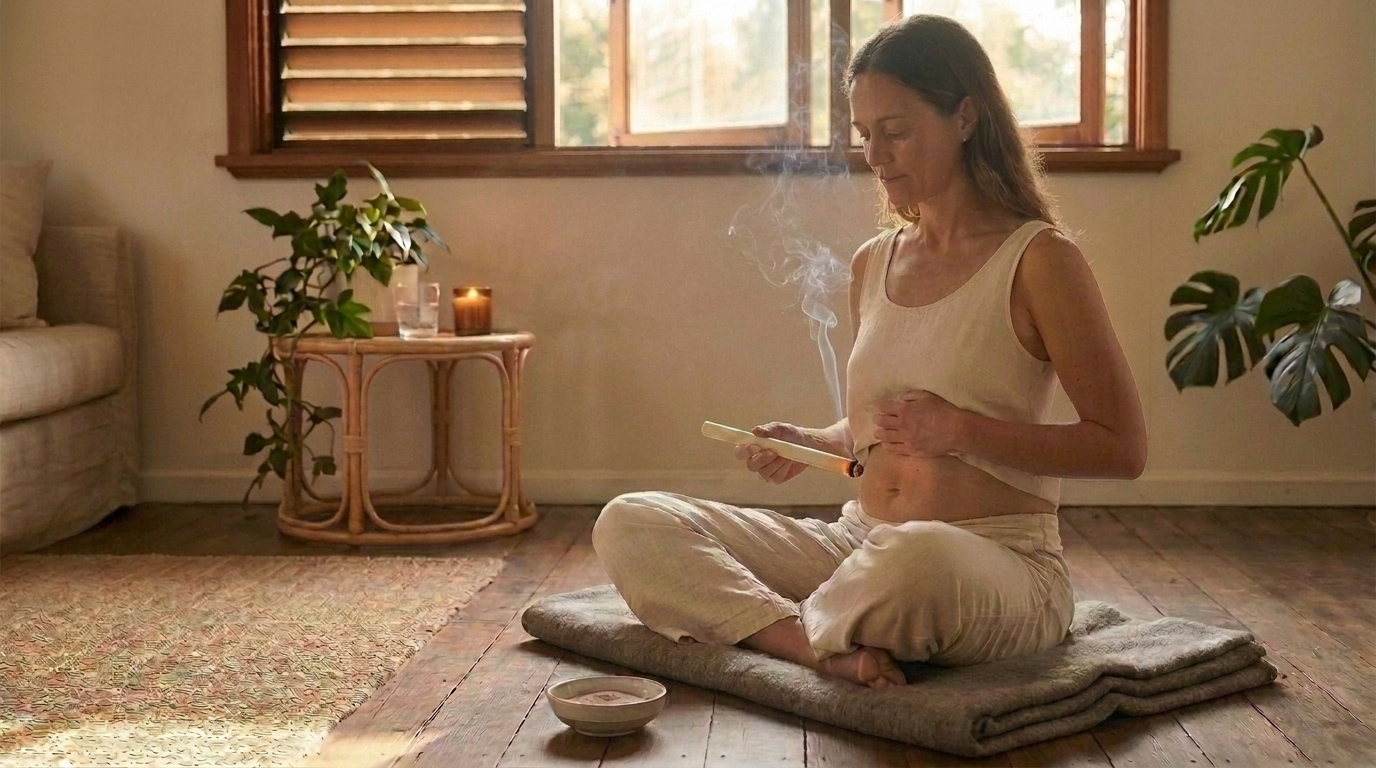
How to Use Moxa Sticks at Home: A Step-by-Step Guide
So your acupuncturist told you to try moxa at home and now you’re holding a stick of herbs wondering if you’re about to summon a spirit or start a campfire in your lounge room.
You’re in the right place.
This is your definitive guide to using moxa at home, safely, confidently, and in a way that actually supports your health (without triggering the smoke alarm). Whether you’re dealing with cold feet, cramps, fatigue, or just need some inner warmth, this ancient therapy has your back. Literally.
What is moxa therapy?
Moxa therapy (moxibustion) is a Chinese medicine treatment that uses dried mugwort (Artemisia vulgaris) burned near the skin to warm specific acupuncture points. Practitioners use it to ease cold, fatigue, pain, and period and fertility issues, often alongside acupuncture or as a self-care tool at home.
Types of Moxa
There are many kinds of moxa, but for this guide I will go over the common moxa stick that acupuncturists usually give to patients to use. It can be either regular or smokeless.
The smokeless kind looks like a long charcoal stick that you put in a bbq. The regular looks like a large cigar with dried herbs inside.
The smokeless moxa isn't quite smokeless, but less smokey, so both will have smoke.
Many people say moxa smells like marijuana. Others say it has hints of tobacco, eucalyptus, and sage notes, or a mild, licorice-like scent with hints of green apples. The higher quality Japanese aged moxa has a more pleasant smell and the smokeless has a more muted smell and doesn't have the same aromatics.
Is Moxibustion Safe to Do at Home Without a Practitioner?
Yes, for most people. Moxa sticks are one of the few tools in Chinese medicine specifically designed for home use, and they have a long history of safe self-application. You don't need a practitioner present to use one.
The main safety considerations are straightforward: you should feel warmth, not burning. Keep the stick moving so heat doesn't concentrate on one spot. Have a glass of water nearby to extinguish it safely when done. Don't use moxa over broken skin, on numb areas, or on your face. And if you're pregnant, check with your practitioner first, some points are contraindicated during pregnancy.
Beyond those basics, moxa is forgiving. If you're warming the wrong point, nothing bad happens, you just don't get the benefit. The step-by-step guide below covers technique, timing, and which points to use for common patterns.
How to Use Moxa
First, you are about to light something on fire, so make sure to have plenty of ventilation so you aren't choking on the smoke. Open some windows and have some good air flow or if it's warm enough you can do it outside.
Think of moxa like a giant incense stick on steroids, it's going to have a strong scent and unless you want it to stick around for days get some air flow going.

What to Have Ready
- Moxa Stick (regular or smokeless)
- Extinguishing Tool (jar or salt, sand or rice)
- Lighter (a windproof butane lighter works faster for smokeless moxa)
How to Use the Moxa

-
Light the stick until the entire tip glows red. Smokeless can take a while to have the whole tip glow red
-
Hover it 2 to 3cm above the skin over specific the acupuncture points you were told to warm (don’t touch the skin).
-
Circle or dip the stick slowly, like you’re roasting a marshmallow, but the marshmallow is your Qi.
-
Stop after 5 to 15 minutes, or when the area feels warm and slightly pink.
-
Extinguish in a jar of salt, sand, or rice. (Don’t douse it in water, it’ll ruin the stick.)
Book a session and I'll make a custom moxa plan tailored to your pattern. Book here →
What Points Should I Moxa
Ideally you should have a qualified acupuncturist to diagnose you and guide you on what points would work best for you.
Here are some guidelines for common indications:
Moxa for Fatigue
Feeling like your battery never quite charges to 100%?
Use moxa over your lower back and just below the belly button (DU-4, REN-4, Ren 6). These are the power stations of your body in Chinese medicine, your Qi bank account. See images below for exact points.


- Do it at night, especially when you’re tired but wired.
- Combine with rest, warm food, and low screen time for best results.
You can also strengthen your Spleen Qi with diet and acupressure alongside moxa.
Moxa for Cold Hands, Feet, Belly
If you’re always the cold one in the room, this is your herbal heat lamp.
Use moxa on bottom of the feet, belly, and low back. This warms your Yang, think of it like jump-starting the fire in your internal fireplace. See images below for exact points (KID-1, REN-6, REN-8, DU-4).


If you also feel heavy and foggy, dampness may be combined with yang deficiency.
Moxa for Pain
Moxa loves pain that improves with heat.
If your ache gets better with a hot water bottle or a warming muscle rub, it’ll likely love moxa.
Use it on or around the area of pain (muscle, joints, etc.), keeping it hovering, not touching.
Great for:
-
Lower back pain
-
Menstrual cramps
-
Neck & shoulder tension
-
Cold knees or feet
Bonus: It increases circulation, reduces inflammation, and calms the nervous system.
Moxa for Period Health
Painful, heavy, irregular, or absent periods? Moxa brings balance.
To help warm the womb, regulate blood flow, and ease cramps use moxa on your inner calf, lower belly, and low back (SP-6, REN-4, REN-6, DU-4). Do it in the week leading up to your period. See images below for exact locations.

For best results before treatments, see how to track your cycle for your acupuncturist.
Moxa for Fertility
Moxa is one of the best ways to prepare the body for conception. Think of inviting the baby into a warm belly that would love to spend time there. To start the process moxa the bottom of your foot, lower belly, and just below your knee (KID-1, REN-4, REN-6, ST-36). See images below for exact locations.

- Use 3 to 4 times per week for a few cycles leading up to conception.
- Partners can do it too, for sperm health and vitality.
- Think of it as “warming the soil before planting seeds.”
When Not to Use Moxa
While moxa is gentle and nourishing, it’s not for everyone or every situation. Here’s when to skip the stick (or at least check with your practitioner first):
Don’t Use Moxa If:
- You have a fever, infection, or inflammation
- Moxa adds heat. If your body’s already burning up (like with a flu, UTI, or skin infection), adding more fire can make things worse. If you suspect chronic infection or stealth illness, read about Gu Syndrome and chronic complex illness.
- You’re pregnant (without supervision)
- Some points (like certain abdominal or lower back spots) can be contraindicated during pregnancy.
- However, supervised moxa, like on Bladder 67 for breech babies, is safe and widely used. Just don’t DIY unless your practitioner says it’s okay.
- You have numbness or poor sensation
- If you can’t clearly feel heat, you risk burning yourself. This includes diabetic neuropathy or post-stroke numbness.
- The area has open wounds, rashes, or varicose veins
- Don’t apply moxa over broken skin, inflamed tissue, or bulging veins.
- You have asthma or are sensitive to smoke
- Moxa smoke can irritate the lungs. Use smokeless moxa, or ask for a heat lamp alternative.
- You’re overheated or have signs of excess heat
- Think: red face, dry mouth, night sweats, hot flushes, restlessness. Moxa could make it worse.
- (Let’s cool you down first, then we can talk fire.)
Always Talk to Your Practitioner If:
-
You’re unsure what points to use
-
You’re dealing with a complex or chronic condition
-
You’re pregnant, postpartum, or trying to conceive
Final Tips
-
Ventilate well, It’s smoky, but the scent is part of the healing
-
Never leave a burning stick unattended, Sounds obvious, but you’d be surprised.
-
Pair it with rest and stillness, Let your body integrate the warmth
-
Mark your points, Ask me to show you exactly where to use it
-
Don’t overdo it, 10 minutes per point is enough
Want Personal Guidance?
Not sure where to start or what points are best for you? Book a session or ask during your next treatment, I’ll make a custom moxa plan just for you.
What to read next

How to Track Your Period and Fertility for Your Acupuncturist
- When you start bleeding
- Everyday you are bleeding: amount, clots, color
- Any pain? Where is it?
- Any mood changes?
- Any bloating or digestion issues?
- Does heat, cold, pressure, movement, laying down make your symptoms feel better?
- Basal body temperature
Apps You Can Use to Track Your Period
Flo

Allows to track and view BBT without paying
Flo Homepage - Flo iOS App - Flo Android App
Clue

Is the best app, but is paid to view BBT chart
Clue Homepage - Clue iOS App - Clue Android App
Built in iOS Health Period Tracking

This comes built into all iOS phones and is free to use.
How to Use the iOS Built in Period Tracking
How to Track Your Basal Body Temperature (BBT)
Tracking your Basal Body Temperature (BBT) is a simple and effective way to understand your menstrual cycle and identify ovulation. BBT is your body’s lowest resting temperature, which slightly rises after ovulation due to hormonal changes. By charting this daily, you can recognize patterns in your cycle.
To check your BBT, use a digital basal thermometer (which measures to two decimal places) immediately upon waking up, before any movement or activity. Keep the thermometer by your bedside and take your temperature at the same time each morning, preferably after at least three to four hours of uninterrupted sleep. You may want to discard temperature readings if you haven't three to four hours of sleep as it will throw off the readings.
Place the thermometer under your tongue and wait for the reading.
Once recorded, enter your temperature into a fertility tracking app as mentioned above. Many apps will generate a chart to help you visualize your cycle trends. Consistency is key—by tracking daily, you’ll begin to notice a biphasic pattern: lower temperatures before ovulation and a sustained rise afterward.
For the most accurate insights, combine BBT tracking with other fertility signs like cervical mucus changes.
If you have irregular cycles or need more guidance, consulting a Chinese medicine doctor or healthcare professional that can help you interpret your data effectively.